The Born-Oppenheimer Approximation: Quantum Mechanics for Molecular Structure in Drug Discovery
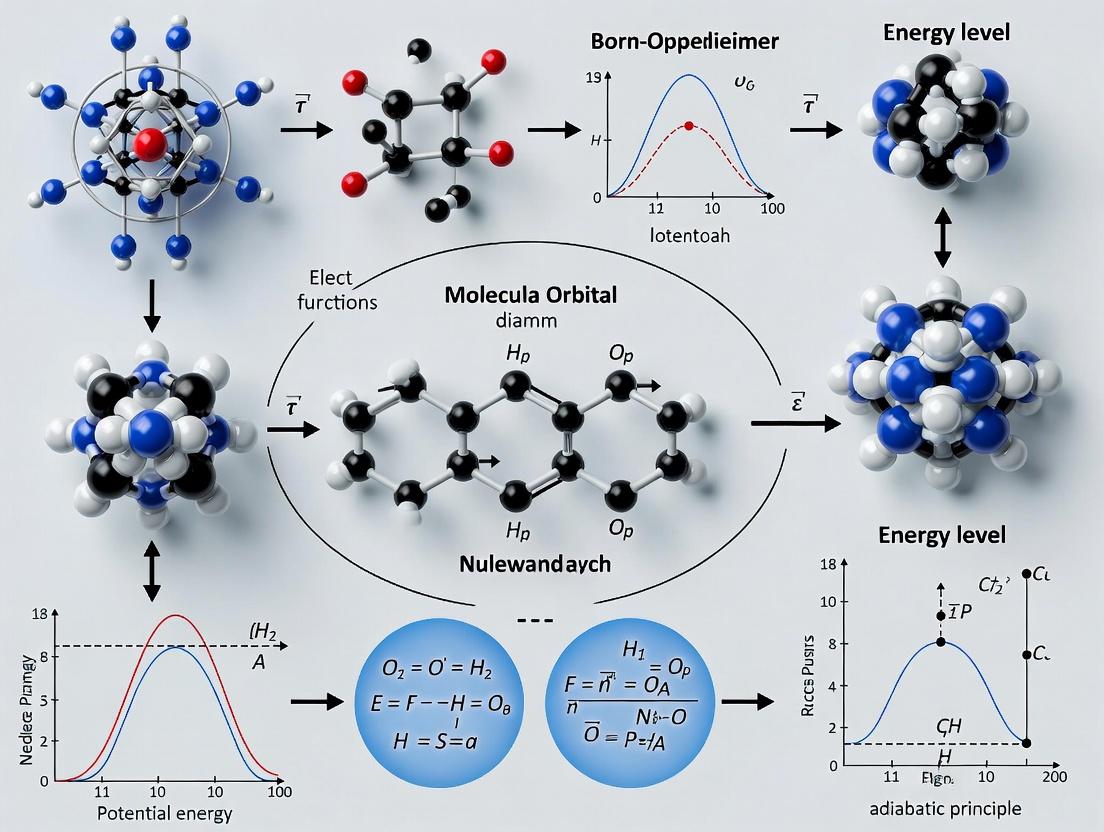
This comprehensive guide explores the Born-Oppenheimer (BO) approximation, the fundamental quantum mechanical principle enabling modern computational chemistry.
The Born-Oppenheimer Approximation: Quantum Mechanics for Molecular Structure in Drug Discovery
Abstract
This comprehensive guide explores the Born-Oppenheimer (BO) approximation, the fundamental quantum mechanical principle enabling modern computational chemistry. Aimed at researchers and drug development professionals, we detail the theory's core concept of separating nuclear and electronic motion, its mathematical formulation, and its critical role in molecular modeling. We then examine practical implementations in computational drug design, common limitations and breakdown scenarios (e.g., conical intersections), optimization strategies for accurate simulations, and validation through comparisons with higher-level theories and experimental data. The article concludes with the approximation's enduring impact on biomolecular simulation and future directions for addressing its limitations in next-generation therapeutics development.
What is the Born-Oppenheimer Approximation? Quantum Foundations for Molecular Modeling
This technical whitepaper explicates the core physical principle enabling the separation of fast electron dynamics from slow nuclear motion. This separation is the foundational axiom of the Born-Oppenheimer (BO) Approximation, a cornerstone concept in quantum chemistry, molecular physics, and computational drug design. The broader thesis posits that the BO approximation is not merely a computational convenience but a physically robust framework whose validity and breakdown conditions are critical for accurate predictions in molecular spectroscopy, reaction dynamics, and biomolecular interaction modeling—areas of direct relevance to rational drug development. This document provides a rigorous technical guide to the principle, its experimental validation, and modern computational methodologies.
Theoretical Foundation: The BO Approximation
The BO approximation arises from the significant disparity in mass (and hence velocity and kinetic energy) between electrons (mass mₑ) and atomic nuclei (mass M, typically >1800mₑ). The full, time-independent Schrödinger equation for a molecule is: ĤΨtot(R, r) = Etot Ψtot(R, r) where R and r denote nuclear and electronic coordinates, respectively.
The Hamiltonian is separated as: Ĥ = Tn(R) + Te(r) + Vne(R, r) + Vee(r) + V_nn(R)
The core principle is that electrons adjust instantaneously to any nuclear configuration. This allows the wavefunction to be factored: Ψtot(R, r) ≈ χ(R) · ψR(r). Here, ψR(r) is the electronic wavefunction solved for a *clamped* nuclear configuration, giving a potential energy surface (PES) Eel(R) upon which nuclei move: [Tn(R) + Eel(R)] χ(R) = E_tot χ(R).
Quantitative Justification: Mass & Energy Scales
The validity of the separation rests on quantifiable differences in energy and time scales.
Table 1: Comparative Mass, Energy, and Time Scales for Electrons and Nuclei
| Property | Electrons | Protons/Nuclei (e.g., Carbon-12) | Ratio (Nuclei/Electron) |
|---|---|---|---|
| Rest Mass (kg) | 9.109 × 10⁻³¹ | 1.673 × 10⁻²⁷ (proton) | ~1836 |
| Typical Kinetic Energy Scale | 1-10 eV (Valence) | ~0.025 eV (Room T vib.) | ~40-400 |
| Characteristic Motion Timescale (fs) | ~0.1 (orbital period) | ~10-100 (vibration period) | ~100-1000 |
| De Broglie Wavelength (in molecule) | Comparable to bond lengths | Much smaller, classical path | — |
Table 2: Key Non-Dimensional Parameters Validating the BO Approximation
| Parameter | Formula | Physical Meaning | Typical Order | Implication |
|---|---|---|---|---|
| Mass Ratio | κ = (mₑ / M)^1/4 | Expansion parameter in perturbation theory. | ~0.1 | Small parameter justifies adiabatic separation. |
| Energy Gap Ratio | ΔE_el / |
Electronic vs. nuclear vibrational energy spacing. | >10 | Ensures negligible non-adiabatic coupling for ground state. |
| Non-Adiabatic Coupling | <ψi|∇Rψ_j> | Coupling between electronic states i and j. | Small for large ΔE_ij | Large when PESs approach or cross (BO breakdown). |
Experimental Protocols for Validation & Probing
Ultrafast Spectroscopy to Probe Time-Scale Separation
Protocol: Femtosecond Transient Absorption Spectroscopy
- Pump Pulse: An ultrashort (~10-50 fs) laser pulse (pump) promotes the molecule to an excited electronic state.
- Nuclear Motion: Nuclei begin to move on the new Potential Energy Surface (PES).
- Probe Pulse: A delayed, broad-band white-light pulse (probe) measures the time-dependent absorption spectrum.
- Analysis: The spectral evolution reveals distinct timescales: instantaneous electronic response (sub-10 fs) followed by slower vibrational wavepacket dynamics (10s-100s fs) and finally thermalization/relaxation (ps-ns).
High-Resolution Vibrational-Rotational Spectroscopy
Protocol: Fourier-Transform Infrared (FTIR) or Cavity Ring-Down Spectroscopy
- Sample Preparation: Isolate molecule in gas phase or inert matrix to minimize intermolecular interactions.
- Scanning: Measure absorption/emission across infrared region with high resolution (<0.01 cm⁻¹).
- Spectral Fitting: Analyze fine structure of vibrational bands. The presence of clean, well-defined rotational fine structure for each vibrational level confirms that the vibrational Hamiltonian (nuclear motion on a single E_el(R)) accurately describes the system, validating the BO separation for that state.
Photoelectron Spectroscopy to Map the PES
Protocol: Angle-Resolved Photoelectron Spectroscopy (ARPES) for Molecules
- Photoionization: A monochromatic VUV/X-ray photon ionizes the molecule, ejecting an electron: M → M⁺ + e⁻.
- Kinetic Energy Analysis: The kinetic energy of the ejected electron is measured with high precision: KEe = hν - (Ebind + E_vib⁺).
- Mapping: By varying photon energy or detecting electron angle, one can reconstruct the vibrational energy levels (E_vib⁺) of the molecular ion. The pattern of these levels directly maps the PES of the ion, a result of the BO separation for M⁺.
Computational Methodologies
Ab Initio Electronic Structure Calculation Protocol
Objective: Solve for ψR(r) and Eel(R) at a single nuclear geometry.
- Input: Define nuclear charges and coordinates (R). Choose a basis set (e.g., cc-pVTZ).
- Mean-Field Solution: Perform a Hartree-Fock (HF) calculation to obtain an initial guess for the electron density.
- Electron Correlation: Apply a post-HF method (e.g., Coupled-Cluster Singles and Doubles - CCSD) or Density Functional Theory (DFT) with a selected functional (e.g., ωB97X-D) to account for electron-electron correlation.
- Output: Obtain total electronic energy (E_el), electron density, and wavefunction derivatives. Repeat over a grid of R to construct the PES.
Molecular Dynamics (MD) Simulation Protocols
A. Born-Oppenheimer Molecular Dynamics (BOMD):
- At each MD time step (≈0.5-1 fs), perform a full electronic structure calculation (as in 5.1) to compute forces on nuclei from E_el(R).
- Integrate Newton's equations for nuclei using these forces.
- Advantage: Fully consistent with BO approximation. Disadvantage: Computationally expensive.
B. Ehrenfest Dynamics (Beyond BO):
- Propagate nuclei on a time-dependent potential that is an average over multiple electronic states, weighted by their instantaneous population.
- Used when non-adiabatic couplings are strong (e.g., conical intersections in photochemical reactions).
- Application: Models breakdown of the BO approximation.
The Scientist's Toolkit: Research Reagent Solutions
Table 3: Essential Computational & Experimental Reagents
| Item/Category | Example/Product | Function & Relevance to BO Principle |
|---|---|---|
| Electronic Structure Software | Gaussian, ORCA, Q-Chem, NWChem | Solves the electronic Schrödinger equation at fixed R, providing E_el(R) and forces. Core to implementing the BO approximation. |
| Ab Initio Molecular Dynamics Suite | CP2K, VASP (for solids), TERACHEM (GPU) | Performs BOMD simulations, explicitly separating electronic and nuclear degrees of freedom. |
| Non-Adiabatic Dynamics Code | SHARC, MCTDH, Tully's fewest-switches surface hopping | Models dynamics when BO approximation fails, treating electron-nuclei coupling explicitly. |
| Ultrafast Laser System | Ti:Sapphire amplifier (e.g., Coherent Libra) | Generates <50 fs pulses to experimentally resolve the temporal separation of electronic and nuclear motion. |
| Quantum Chemistry Basis Set | Dunning's cc-pVXZ (X=D,T,Q), Pople's 6-31G* | Mathematical functions representing atomic orbitals. Critical for accurate calculation of E_el(R). |
| Density Functional (DFT) | ωB97X-D, B3LYP, PBE0 | Approximate functionals for electron exchange-correlation. Balance of accuracy/cost for large systems (e.g., drug molecules). |
| Pseudopotential/PP | Goedecker-Teter-Hutter (GTH), Norm-Conserving PPs | Replaces core electrons with an effective potential, reducing computational cost while maintaining valence electron accuracy (relies on BO). |
Visualization of Concepts & Workflows
This whitepaper explores the evolution of quantum chemistry from the foundational Born-Oppenheimer (BO) approximation to contemporary computational methodologies. The core thesis posits that the BO approximation is not merely a historical simplification but the essential theoretical scaffold enabling the entire edifice of ab initio electronic structure calculations and molecular dynamics simulations. Its separation of electronic and nuclear motion remains the critical first step in solving the molecular Schrödinger equation, directly impacting fields from catalyst design to computer-aided drug discovery.
The Born-Oppenheimer Approximation: Core Theory
The BO approximation addresses the complexity of the molecular Schrödinger equation: [ \hat{H}{\text{total}} \Psi(\mathbf{r}, \mathbf{R}) = E{\text{total}} \Psi(\mathbf{r}, \mathbf{R}) ] where (\mathbf{r}) and (\mathbf{R}) denote electronic and nuclear coordinates, respectively. The Hamiltonian is: [ \hat{H}{\text{total}} = -\sum{i} \frac{\hbar^2}{2me} \nablai^2 -\sum{A} \frac{\hbar^2}{2MA} \nablaA^2 - \sum{i,A} \frac{ZA e^2}{|\mathbf{r}i - \mathbf{R}A|} + \sum{i>j} \frac{e^2}{|\mathbf{r}i - \mathbf{r}j|} + \sum{A>B} \frac{ZA ZB e^2}{|\mathbf{R}A - \mathbf{R}_B|} ]
The BO approximation exploits the significant mass disparity ((me \ll MA)), leading to a two-step solution:
- Electronic Structure Problem: Treat nuclei as fixed at position (\mathbf{R}), solve for electronic wavefunction (\psi{\mathbf{R}}(\mathbf{r})) and energy (E{\text{el}}(\mathbf{R})): [ \hat{H}{\text{el}} \psi{\mathbf{R}}(\mathbf{r}) = \left( \hat{T}e + \hat{V}{eN} + \hat{V}{ee} + \hat{V}{NN} \right) \psi{\mathbf{R}}(\mathbf{r}) = E{\text{el}}(\mathbf{R}) \psi_{\mathbf{R}}(\mathbf{r}) ]
- Nuclear Motion Problem: Use (E{\text{el}}(\mathbf{R})) as the potential energy surface (PES) for nuclear motion: [ \left[ \hat{T}N + E{\text{el}}(\mathbf{R}) \right] \chi(\mathbf{R}) = E{\text{total}} \chi(\mathbf{R}) ]
Table 1: Quantitative Impact of the BO Approximation
| Parameter | Without BO Separation | With BO Approximation | Computational Consequence |
|---|---|---|---|
| Coupled Variables | ~3(Nelec + Nnuc) | 3Nelec and then 3Nnuc | Dimensionality reduced from ~103 to tractable separate problems |
| Wavefunction Form | (\Psi(\mathbf{r}, \mathbf{R})) | (\Psi(\mathbf{r}, \mathbf{R}) \approx \psi_{\mathbf{R}}(\mathbf{r}) \cdot \chi(\mathbf{R})) | Enables variational methods for electrons |
| Timescale Decoupling | ~1 fs (electronic) & ~10-100 fs (nuclear) | Electronic solved for static nuclei | Allows geometry optimization, MD on single PES |
Evolution of Computational Methods Post-BO
The BO approximation enabled the development of hierarchical computational methods, each with varying fidelity and cost.
Table 2: Hierarchy of Quantum Chemical Methods Enabled by the BO Approximation
| Method Class | Theoretical Foundation | Typical System Size | Accuracy (Energy) | Scaling (O(N^k)) |
|---|---|---|---|---|
| Hartree-Fock (HF) | Mean-field, single determinant | 10-100 atoms | ±50-100 kcal/mol | N4 |
| Density Functional Theory (DFT) | Kohn-Sham equations, functional approximation | 100-1000 atoms | ±5-20 kcal/mol | N3 |
| Post-Hartree-Fock (MP2, CCSD(T)) | Electron correlation, perturbative/CI methods | 10-50 atoms | ±1-5 kcal/mol (CCSD(T)) | N5-N7 |
| Semi-empirical | Parametrized integrals | 1000-10,000 atoms | Variable, system-dependent | N2-N3 |
| Force Fields (Classical MD) | Newtonian mechanics, empirical potentials | 10,000-1,000,000 atoms | Not applicable for electronic properties | N2 |
Title: Evolution of Computational Methods from BO Approximation
Experimental Protocols in Modern Computational Chemistry
Protocol 1: Ab Initio Protein-Ligand Binding Affinity Calculation (using DFT)
- System Preparation: Obtain 3D structures of protein and ligand from PDB or docking. Add hydrogen atoms and assign protonation states at physiological pH using software like
PDB2PQRorH++. - Geometry Optimization: Isolate the ligand and a defined binding site (e.g., residues within 5-10 Å of ligand). Perform full geometry optimization using a DFT functional (e.g., B3LYP, ωB97X-D) and a basis set (e.g., 6-31G*) with an implicit solvation model (e.g., PCM, SMD) to relax the structure to the nearest local minimum on the BO PES.
- Single-Point Energy Calculation: Using the optimized geometry, perform a higher-accuracy single-point energy calculation with a larger basis set (e.g., def2-TZVP) and a dispersion-corrected functional. Calculate the energy for the complex (Ecomplex), the protein (Eprotein), and the ligand (Eligand).
- Binding Energy Calculation: Compute ΔEbind = Ecomplex - (Eprotein + Eligand). Apply thermodynamic corrections (from frequency calculations) to approximate ΔGbind.
Protocol 2: Born-Oppenheimer Molecular Dynamics (BOMD) Simulation
- Initial Configuration: Build or obtain a solvated system (e.g., protein in a water box with ions) using tools like
CHARMM-GUIortleap. - Electronic Structure Setup: Choose a fast, ab initio electronic structure method applicable to dynamics, typically Density Functional Theory (DFT) with a plane-wave basis set (e.g., in
CP2K,VASP) or a tight-binding method (DFTB). - Dynamics Propagation: At each molecular dynamics step (Δt ≈ 0.5-1.0 fs): a. With nuclei fixed at position R(t), solve the electronic Schrödinger equation to obtain the ground-state energy Eel(R) and wavefunction. b. Calculate the Hellmann-Feynman forces on nuclei: F = -∇REel(R). c. Propagate nuclei to time t+Δt using Newton's equations (MA d²RA/dt² = FA) via integrators like Verlet or Velocity Verlet.
- Analysis: Analyze the generated trajectory for structural stability, dynamics, and spectroscopic properties.
The Scientist's Toolkit: Essential Research Reagent Solutions
Table 3: Key Software and Computational Resources for BO-Based Research
| Item (Software/Resource) | Category | Primary Function |
|---|---|---|
| Gaussian, ORCA, PSI4 | Electronic Structure | Solves the BO electronic problem via HF, DFT, and post-HF methods. Provides energies, geometries, and molecular properties. |
| CP2K, VASP, Quantum ESPRESSO | Ab Initio MD | Performs Born-Oppenheimer or Car-Parrinello MD using DFT, calculating forces on-the-fly from the electronic structure. |
| AMBER, CHARMM, GROMACS | Classical MD | Propagates nuclear dynamics on a single, pre-defined BO PES described by a classical force field. |
| PLUMED | Enhanced Sampling | Adds algorithms (metadynamics, umbrella sampling) to classical or ab initio MD to efficiently explore the BO PES. |
| basis set exchange | Basis Set Library | Repository of Gaussian-type orbital basis sets essential for defining the wavefunction expansion in BO calculations. |
| Molpro, Q-Chem | High-Accuracy Quantum Chemistry | Implements advanced correlated methods (e.g., CCSD(T), MRCI) for benchmarking on the BO PES. |
Title: Workflow for Drug Discovery Calculations Using BO Framework
The Born-Oppenheimer (BO) approximation is a cornerstone of molecular quantum mechanics, enabling the separation of electronic and nuclear motion. Its validity hinges critically on the adiabatic theorem, which states that a physical system remains in its instantaneous eigenstate if a given perturbation is acting on it slowly enough. In molecular systems, the "slow" perturbation is the nuclear kinetic energy operator. This whitepaper provides a rigorous derivation of the adiabatic theorem's role in justifying the neglect of specific nuclear kinetic energy terms within the standard BO framework, a fundamental concept for researchers in quantum chemistry and molecular modeling for drug development.
Foundational Theory and Mathematical Framework
The total molecular Hamiltonian for a system with nuclei (N) and electrons (e) is: [ \hat{H}{\text{total}} = \hat{T}N(\mathbf{R}) + \hat{T}e(\mathbf{r}) + \hat{V}{eN}(\mathbf{r}, \mathbf{R}) + \hat{V}{NN}(\mathbf{R}) + \hat{V}{ee}(\mathbf{r}) ] where (\mathbf{R}) and (\mathbf{r}) denote nuclear and electronic coordinates, respectively.
The BO approximation posits a wavefunction of the form (\Psi{\text{total}}(\mathbf{r}, \mathbf{R}) = \chi(\mathbf{R}) \psi{\mathbf{R}}(\mathbf{r})), where (\psi{\mathbf{R}}(\mathbf{r})) is the electronic eigenfunction for clamped nuclei: [ \left[ \hat{T}e + \hat{V}{eN} + \hat{V}{ee} + \hat{V}{NN} \right] \psi{\mathbf{R}}(\mathbf{r}) = E{\text{el}}(\mathbf{R}) \psi{\mathbf{R}}(\mathbf{r}) ] The nuclear wavefunction (\chi(\mathbf{R})) is then a solution to: [ \left[ \hat{T}N + E{\text{el}}(\mathbf{R}) \right] \chi(\mathbf{R}) = E{\text{total}} \chi(\mathbf{R}) ] This simple separation neglects the action of the nuclear kinetic energy operator (\hat{T}N) on the parametric (\mathbf{R})-dependence of the electronic wavefunction. A full treatment reveals the coupled nature of the equations.
Mathematical Derivation of the Non-Adiabatic Couplings
Acting with the full Hamiltonian on the product ansatz: [ \hat{H}{\text{total}} [\chi \psi{\mathbf{R}}] = \psi{\mathbf{R}} \hat{T}N \chi + \chi \hat{T}N \psi{\mathbf{R}} + \chi \hat{H}{\text{el}} \psi{\mathbf{R}} ] Since (\hat{H}{\text{el}} \psi{\mathbf{R}} = E{\text{el}}(\mathbf{R}) \psi{\mathbf{R}}), we focus on the term (\hat{T}N (\chi \psi{\mathbf{R}})). The nuclear kinetic energy operator is (\hat{T}N = -\sum{k} \frac{\hbar^2}{2Mk} \nabla{\mathbf{R}_k}^2).
Applying the Laplacian: [ \nabla^2{\mathbf{R}k} (\chi \psi{\mathbf{R}}) = \chi \nabla^2{\mathbf{R}k} \psi{\mathbf{R}} + 2 (\nabla{\mathbf{R}k} \chi) \cdot (\nabla{\mathbf{R}k} \psi{\mathbf{R}}) + \psi{\mathbf{R}} \nabla^2{\mathbf{R}k} \chi ] Substituting back, the full Schrödinger equation becomes: [ \left[ \hat{T}N + E{\text{el}}(\mathbf{R}) \right] \chi \psi{\mathbf{R}} - \sum{k} \frac{\hbar^2}{2Mk} \left[ 2 (\nabla{\mathbf{R}k} \chi) \cdot (\nabla{\mathbf{R}k} \psi{\mathbf{R}}) + \chi (\nabla^2{\mathbf{R}k} \psi{\mathbf{R}}) \right] = E{\text{total}} \chi \psi_{\mathbf{R}} ]
Multiplying from the left by (\psi{\mathbf{R}}^*) and integrating over electronic coordinates yields the equation for the nuclear wavefunction: [ \left[ \hat{T}N + E{\text{el}}(\mathbf{R}) + \hat{T}N^{\text{(BO)}} \right] \chi(\mathbf{R}) = E{\text{total}} \chi(\mathbf{R}) ] where the *Born-Oppenheimer correction terms* are: [ \hat{T}N^{\text{(BO)}} = \langle \psi{\mathbf{R}} | \hat{T}N | \psi{\mathbf{R}} \ranglee + \sumk \frac{\hbar^2}{Mk} \langle \psi{\mathbf{R}} | \nabla{\mathbf{R}k} | \psi{\mathbf{R}} \ranglee \cdot \nabla{\mathbf{R}_k} ] The first term is the adiabatic diagonal correction (small but non-zero). The second, first-derivative term is the non-adiabatic coupling vector. Its magnitude dictates the validity of the BO approximation.
The Adiabatic Theorem and Its Quantitative Criterion
The adiabatic theorem provides the condition for neglecting the non-adiabatic coupling. Consider two electronic eigenstates (m) and (n). The coupling between them is proportional to the matrix element: [ \mathbf{F}{mn}^{(k)}(\mathbf{R}) = \langle \psim(\mathbf{R}) | \nabla{\mathbf{R}k} \psin(\mathbf{R}) \rangle = \frac{\langle \psim | \nabla{\mathbf{R}k} \hat{H}{\text{el}} | \psin \rangle}{En(\mathbf{R}) - Em(\mathbf{R})}, \quad m \neq n ] The BO approximation is valid when the nuclear motion is too slow to induce transitions between electronic states. The quantitative condition is: [ \frac{\hbar |\mathbf{v}k \cdot \mathbf{F}{mn}^{(k)}|}{|En - Em|} \ll 1 ] where (\mathbf{v}_k) is the nuclear velocity. This states that the energy gap between electronic states must be large compared to the coupling strength induced by nuclear motion.
Table 1: Characteristic Energy Scales and Coupling Strengths in Molecular Systems
| System / Molecule | Typical Electronic Gap ΔE (eV) | Representative Non-Adiabatic Coupling (ℏv·F) (eV) | BO Validity Ratio (ℏv·F / ΔE) |
|---|---|---|---|
| H₂ (Ground State) | ~10 | ~0.001 | ~10⁻⁴ (Excellent) |
| Organic Molecule (S₀/S₁) | 3.0 - 5.0 | ~0.01 - 0.1 (near conical intersection) | ~0.003 - 0.03 (Valid away from CI) |
| Transition Metal Complex | 1.0 - 2.0 | ~0.05 - 0.2 | ~0.025 - 0.2 (Conditional) |
| Biological Chromophore (e.g., GFP) | 2.5 | Can approach ~0.5 near funnels | Can approach ~0.2 (Requires NA-MD) |
Experimental Protocols for Probing Non-Adiabaticity
Protocol 1: Ultrafast Spectroscopy for Non-Adiabatic Coupling Measurement
- Sample Preparation: Purify target molecule (e.g., a photopharmacological agent). Prepare solution in appropriate solvent, degas to prevent quenching.
- Pump-Probe Setup: Use a femtosecond laser system (Ti:Sapphire amplifier, 800 nm, 100 fs pulses). Generate pump pulse at absorption maximum (via OPA/DFG). Probe pulse is a broadband white-light continuum.
- Data Acquisition: Excite sample with pump pulse. Measure transient absorption spectra at delayed time intervals (0-10 ps). Track decay of excited-state absorption and rise of ground-state bleach/stimulated emission.
- Analysis: Fit time traces at key wavelengths. Multi-exponential decay reveals timescales. Deviations from single-exponential behavior, especially sub-100 fs components, indicate strong non-adiabatic coupling, often due to conical intersections. Map observed rates against energy gaps computed via TD-DFT or CASSCF.
Protocol 2: Cryogenic Matrix Isolation Spectroscopy for Adiabatic Potential Validation
- Matrix Deposition: Co-deposit vaporized target molecule with large excess of inert gas (Ar or Ne) onto a cryogenically cooled (10 K) CsI window in a high-vacuum chamber.
- Slow Energy Relaxation: Allow the trapped molecules to relax adiabatically to their vibrational ground state on the electronic potential energy surface.
- Spectral Measurement: Record high-resolution FTIR and electronic absorption spectra. Narrow, vibrationally resolved bands confirm the system is in the adiabatic ground state.
- Perturbation: Gradually warm the matrix or introduce a slow, coordinated perturbation (e.g., polarized light). Monitor spectral changes. Minimal band broadening or shifting indicates the system remains in its instantaneous eigenstate, a direct observation of adiabatic following.
Diagram Title: The Adiabatic Criterion Decision Workflow in the Born-Oppenheimer Approximation
The Scientist's Toolkit: Key Research Reagent Solutions
Table 2: Essential Computational and Experimental Reagents for Adiabaticity Research
| Item Name | Function & Relevance |
|---|---|
| High-Level Electronic Structure Software (e.g., Molpro, OpenMolcas, MOLPRO) | Performs multireference calculations (CASSCF, MRCI) to accurately map adiabatic PESs and compute non-adiabatic coupling vectors, especially near conical intersections. |
| Non-Adiabatic Molecular Dynamics (NAMD) Suite (e.g., SHARC, Newton-X) | Propagates nuclear motion on multiple coupled PESs using surface hopping or other mixed quantum-classical algorithms, essential when the BO approximation fails. |
| Femtosecond Laser System with OPA/DFG | Generates tunable ultrafast pulses to initiate and probe non-adiabatic dynamics (e.g., internal conversion, intersystem crossing) on the timescale of nuclear motion (fs-ps). |
| Cryostat (Liquid He) with Vacuum Chamber | Enables matrix isolation spectroscopy, creating a near-perfect adiabatic environment by minimizing thermal perturbations and allowing observation of pristine eigenstates. |
| Isotopically Labeled Compounds (¹³C, ¹⁵N, D) | Simplifies complex vibrational spectra, allowing precise tracking of nuclear motion on adiabatic surfaces and deconvolution of kinetic isotope effects in reaction rates. |
| Ab Initio Molecular Dynamics (AIMD) Software (e.g., CP2K, FHI-aims) | Computes on-the-fly electronic structure forces for nuclear trajectories, capable of capturing adiabatic dynamics and, with extensions, non-adiabatic effects. |
The adiabatic theorem provides the rigorous mathematical underpinning for separating electronic and nuclear dynamics. The neglect of the nuclear kinetic energy term's off-diagonal action is justified only when electronic energy gaps are large relative to the non-adiabatic coupling. In drug development, this justifies the widespread use of molecular mechanics force fields (which assume a single, adiabatic PES) for simulating protein-ligand binding. However, processes like photodynamic therapy, redox reactions, or interactions with transition metals often involve closely spaced electronic states, requiring non-adiabatic methodologies for accurate modeling. Understanding these limits is crucial for predicting reaction pathways, designing photopharmaceuticals, and interpreting spectroscopic data in complex biological environments.
Within the foundational framework of the Born-Oppenheimer (BO) approximation, the concept of the Potential Energy Surface (PES) emerges as the central result. The BO approximation posits a separation between fast-moving electrons and slow-moving nuclei due to their significant mass disparity. Mathematically, the total molecular wavefunction is factorized: Ψtotal(r, R) ≈ ψel(r; R) χ_nuc(R). Here, r and R denote electronic and nuclear coordinates, respectively.
The key outcome is that for each fixed nuclear geometry R, one solves the electronic Schrödinger equation: Ĥel ψel(r; R) = Eel(R) ψel(r; R). The resulting eigenvalue, Eel(R), when combined with the nuclear repulsion energy Vnn(R), defines the potential energy surface: V(R) = Eel(R) + Vnn(R). This V(R) governs nuclear motion, serving as the potential term in the nuclear Schrödinger equation. Thus, the multi-dimensional PES is the effective landscape upon which nuclei move, enabling the prediction of molecular structure, stability, reactivity, and spectroscopic properties.
Computational Methodologies for PES Mapping
Mapping the PES requires calculating V(R) at many points. The choice of method balances accuracy and computational cost.
Table 1: Comparative Analysis of Electronic Structure Methods for PES Computation
| Method | Key Theory | Computational Scaling | Typical Accuracy (Energy) | Best For PES Region |
|---|---|---|---|---|
| Density Functional Theory (DFT) | Kohn-Sham equations with approximate exchange-correlation functional. | O(N³) | ~5-10 kcal/mol | Equilibrium geometries, transition states. |
| Hartree-Fock (HF) | Mean-field approximation, includes exchange but not correlation. | O(N⁴) | ~50-100 kcal/mol (error large) | Not recommended for quantitative PES; baseline. |
| Møller-Plesset Perturbation (MP2) | Post-HF method; 2nd-order perturbation theory for correlation. | O(N⁵) | ~5-10 kcal/mol (if HF good) | Non-covalent interactions, single-reference regions. |
| Coupled Cluster (CCSD(T)) | "Gold standard"; includes single, double, perturbative triple excitations. | O(N⁷) | ~1-2 kcal/mol | Highly accurate benchmarks, small systems. |
| Complete Active Space SCF (CASSCF) | Multi-configurational SCF within an active orbital space. | Exponential with active space size | Variable; qualitative shapes | Bond breaking, excited states, near-degeneracies. |
Experimental Protocol: Ab Initio PES Mapping for a Triatomic Molecule (e.g., H₂O)
- System Definition: Define internal coordinates (e.g., two O-H bond lengths, R1, R2, and the H-O-H bond angle, θ).
- Grid Generation: Create a 3D grid over relevant ranges (e.g., R1, R2: 0.7-1.5 Å; θ: 80°-120°). Step size determines resolution (e.g., 0.05 Å, 5°).
- Single-Point Calculation: For each geometry point Ri on the grid: a. Input Ri to the electronic structure code (e.g., Gaussian, ORCA, Q-Chem). b. Specify method and basis set (e.g., CCSD(T)/cc-pVTZ). c. Execute calculation to obtain total electronic energy Eel(Ri) and Vnn(Ri). d. Compute V(Ri) = Eel(Ri) + Vnn(R_i).
- Surface Fitting: Fit computed points to an analytic function (e.g., polynomial, neural network potential) for continuous representation.
- Critical Point Location: Use algorithms (e.g., quasi-Newton) to find stationary points where ∇V(R)=0:
- Minima: Stable isomers (all vibrational frequencies real).
- First-Order Saddle Points: Transition states (one imaginary frequency).
- Validation: Compare harmonic frequencies at minima with experimental spectroscopic data. Check reaction path connectivity via intrinsic reaction coordinate (IRC) calculations.
Workflow for Computational PES Mapping
The Scientist's Toolkit: Research Reagent Solutions
Table 2: Essential Computational Tools & Resources for PES Research
| Item/Reagent | Function/Brief Explanation |
|---|---|
| Electronic Structure Software (Gaussian, ORCA, Q-Chem, PySCF) | Core engines to solve the electronic Schrödinger equation at specified geometries and theory levels. |
| High-Performance Computing (HPC) Cluster | Provides the necessary computational power for expensive ab initio calculations over many grid points. |
| Basis Set Libraries (cc-pVXZ, def2-TZVP, 6-31G*) | Sets of mathematical functions (atomic orbitals) used to expand molecular orbitals; directly impact accuracy and cost. |
| Automation & Scripting Tools (Python, Bash) | For automating grid generation, job submission, data extraction, and surface fitting. |
| PES Visualization/Analysis Software (Matplotlib, VMD, Jmol) | To generate 2D/3D contour and surface plots from multi-dimensional energy data. |
| Global Optimization Packages (GLOW, OPTIM) | Specialized algorithms for efficiently locating minima and saddle points on complex, high-dimensional PESs. |
| Machine Learning Potential Libraries (PyTorch, TensorFlow, AmpTorch) | Frameworks to train neural network potentials on ab initio data, enabling rapid PES evaluation for molecular dynamics. |
Advanced Concepts: Beyond the Basic BO PES
The BO approximation breaks down when electronic states become close in energy (near-degeneracies), leading to conical intersections and non-adiabatic coupling. Here, the single-surface picture fails, and multiple PESs must be considered simultaneously.
Table 3: Scenarios Requiring Beyond-Born-Oppenheimer Treatments
| Scenario | Physical Consequence | Required Computational Approach |
|---|---|---|
| Photochemical Reactions | Ultrafast radiationless decay via conical intersections. | Multi-reference methods (CASSCF/CASPT2, MRCI) to map coupled PESs. |
| Jahn-Teller Distortions | Spontaneous symmetry breaking in degenerate electronic states. | Calculation of adiabatic PESs for split components. |
| Spin-Orbit Coupling | Mixing of different spin multiplicities (e.g., singlet-triplet). | Relativistic quantum chemistry methods (e.g., DFT with SOC). |
| Non-Adiabatic Molecular Dynamics | Electronic transitions during nuclear motion (e.g., electron transfer). | Surface hopping or Ehrenfest dynamics on multiple PESs. |
PES Coupling at Conical Intersections
The Potential Energy Surface, as directly furnished by the Born-Oppenheimer approximation, remains the central unifying concept for understanding and predicting molecular behavior. Its accurate computation enables rational design in catalysis and drug development—by identifying transition states for kinetic modeling or protein-ligand binding landscapes for free energy calculations. Ongoing advances in machine-learned interatomic potentials and explicit beyond-BO dynamics ensure the PES paradigm will continue to underpin molecular simulation, connecting quantum mechanics to observable chemical phenomena.
This document constitutes a core chapter of a comprehensive thesis on the Born-Oppenheimer (BO) approximation. The broader research investigates the foundational theory, historical development, and modern computational applications of this cornerstone concept in quantum chemistry. Herein, we dissect the key physical and chemical assumptions underpinning the BO approximation and provide a rigorous analysis of why, and under what precise conditions, these assumptions remain valid for the vast majority of molecular systems in their electronic ground state. This validity is the bedrock upon which modern computational drug discovery and materials science are built.
Foundational Assumptions of the Born-Oppenheimer Approximation
The BO approximation separates the total molecular wavefunction into a product of electronic and nuclear components: Ψtotal(r, R) ≈ ψel(r; R) χ_nuc(R). This separation rests on three critical, interconnected assumptions.
The Mass Disparity Assumption
The core physical rationale is the significant mass difference between electrons and nuclei (me << mnuc). This leads to a disparate timescale of motion: electrons, being light, adjust almost instantaneously to any change in nuclear configuration. Nuclei, therefore, experience an average potential field generated by the rapidly-moving electrons.
Quantitative Justification: The validity can be assessed by comparing characteristic energy scales.
Table 1: Characteristic Energy Scales in Molecules
| Energy Term | Typical Magnitude (cm⁻¹) | Physical Origin | Implication for BO |
|---|---|---|---|
| Electronic Energy (E_el) | 10⁴ - 10⁶ | Electronic transitions | Large separation from nuclear energies. |
| Vibrational Energy (E_vib) | 10² - 10³ | Nuclear vibration | Small compared to E_el. |
| Rotational Energy (E_rot) | 1 - 10² | Molecular rotation | Negligible on electronic scale. |
| Non-Adiabatic Coupling | < 10² (usually) | Derivative coupling ⟨ψel∣∇R ψ_el⟩ | Measures BO breakdown; small for ground states. |
The Adiabaticity Assumption
The system remains on a single adiabatic electronic potential energy surface (PES). This assumes no coupling between electronic states induced by nuclear motion. The electronic wavefunction is parametrically dependent on R, meaning it changes smoothly with nuclear positions without undergoing transitions.
The Neglect of Non-Adiabatic Couplings
The approximation explicitly neglects the derivative coupling terms, ⟨ψel∣∇R ψel⟩ and ⟨ψel∣∇²R ψel⟩, which represent the dynamical interaction between electronic and nuclear motion. Their magnitude is inversely proportional to the energy gap between electronic states.
Experimental Validation Methodologies
Verifying the BO approximation involves probing the separation of electronic and nuclear dynamics and quantifying non-adiabatic effects.
High-Resolution Vibrational Spectroscopy
Protocol: Use Fourier-transform infrared (FTIR) or Raman spectroscopy to measure vibrational frequencies of isotopologues (e.g., H₂O vs. D₂O). Rationale: Under the BO approximation, the electronic potential is isotope-independent. Observed isotopic shifts in vibrational levels are purely due to changes in reduced nuclear mass. Agreement between calculated (using BO-derived potentials) and observed isotope shifts validates the approximation for the ground-state PES. Workflow: 1) Synthesize/purity isotopologues. 2) Acquire high-resolution IR/Raman spectra under controlled pressure/temperature. 3) Fit spectra to extract precise vibrational constants. 4) Compare experimental shifts with ab initio predictions from BO-based electronic structure calculations.
Femtosecond Pump-Probe Spectroscopy
Protocol: Employ ultrafast laser pulses to track wavepacket dynamics on potential energy surfaces. Rationale: A femtosecond "pump" pulse excites a molecule. A delayed "probe" pulse interrogates the system. For molecules where BO holds strongly in the ground state, wavepacket motion on an excited PES is coherent and can be modeled using BO surfaces. Observing predicted recurrence times validates the model. Breakdown manifests as rapid dephasing or population transfer at conical intersections. Workflow: 1) Generate sub-50-fs laser pulses. 2) Split into pump and probe beams with variable time delay. 3) Focus beams onto molecular jet sample. 4) Detect ion or fluorescence signal as a function of delay. 5) Reconstruct nuclear dynamics and compare to quantum dynamics simulations with/without BO.
Precision Measurement of Dissociation Energies
Protocol: Measure bond dissociation energies (D₀) via velocity-map imaging of photofragment spectroscopy or threshold ionization. Rationale: The BO approximation provides adiabatic dissociation curves. Highly accurate experimental D₀ values can be compared to values computed by solving the nuclear Schrödinger equation on a high-level ab initio BO potential. Agreement within computational error bars supports the fidelity of the BO PES.
Validation Pathways for the Born-Oppenheimer Approximation
The Scientist's Toolkit: Research Reagent Solutions
Table 2: Essential Materials for Experimental BO Validation
| Item / Reagent | Function in Validation | Critical Specification |
|---|---|---|
| Deuterated Solvents/Compounds (e.g., D₂O, CDCl₃) | Provide isotopologues for vibrational spectroscopy to test mass-disparity assumption. | Isotopic purity > 99.8% D. |
| Molecular Beam Source | Produces cold, isolated gas-phase molecules to eliminate solvent effects and simplify spectra. | Rotational temperature < 10 K. |
| Femtosecond Ti:Sapphire Laser System | Generates ultrafast pulses to initiate and probe nuclear dynamics on femtosecond timescales. | Pulse width < 100 fs, tunable wavelength. |
| Velocity Map Imaging (VMI) Detector | Measures speed and angular distribution of photofragments for precise dissociation energy mapping. | Position-sensitive delay-line anode. |
| High-Precision Wavelength Meter | Calibrates laser wavelengths for accurate determination of transition energies and gaps. | Absolute accuracy < 0.0001 nm. |
| Cryogenic Spectroscopy Cell | Cools samples to reduce thermal broadening of spectral lines for higher resolution. | Temperature stability ±0.1 K at 10 K. |
Conditions for Breakdown and Ground-State Resilience
The BO approximation fails when its core assumptions are violated. Notably, most ground-state molecules are resilient.
Table 3: Conditions for BO Breakdown vs. Ground-State Resilience
| Condition for Breakdown | Typical Molecular Scenario | Why Most Ground States Are Robust |
|---|---|---|
| Small Electronic Energy Gaps | Conical intersections, near-degeneracies in transition metals or excited states. | Ground states typically have a large HOMO-LUMO gap (> several eV) to the first excited state. |
| Light, Fast-Moving Nuclei | Hydrogen tunneling, reactions involving proton-coupled electron transfer. | While protons are light, in stable ground-state geometries, the potential wells are deep and coupling terms remain small. |
| High Kinetic Energy of Nuclei | High-temperature plasmas, extreme photodissociation. | Ground-state molecules at equilibrium or thermal energies have nuclear velocities where the adiabatic following holds. |
| Strong Spin-Orbit Coupling | Heavy elements (e.g., lanthanides, actinides). | For organic molecules and first/second-row elements prevalent in drug design, spin-orbit effects are minimal in the ground state. |
BO Assumptions, Violations, and Ground-State Shielding
Within the framework of our thesis, this analysis substantiates that the Born-Oppenheimer approximation's enduring success for ground-state molecules is not accidental but a direct consequence of well-understood physical principles. The significant mass disparity, combined with the typically large energy gap between the ground and first excited electronic state in stable molecules, ensures the smallness of non-adiabatic coupling terms. This allows for the reliable construction of adiabatic potential energy surfaces, which form the computational backbone for quantum chemistry, molecular dynamics simulations, and structure-based drug design. The approximation's limits are clearly marked by conditions of degeneracy, involving very light nuclei, or high energy—conditions often avoided in the stable ground-state systems central to pharmaceutical research.
The Born-Oppenheimer (BO) approximation is a cornerstone of quantum chemistry and molecular physics, enabling the separation of electronic and nuclear motion. This approximation rests on the significant mass difference between electrons and nuclei, allowing the electronic Schrödinger equation to be solved for fixed nuclear positions. The resulting electronic energy acts as a potential energy surface (PES) upon which nuclei move. This whitepaper provides an in-depth technical guide to visualizing the core concepts of electronic and nuclear dynamics within this fundamental theory, which is critical for research in molecular spectroscopy, reaction dynamics, and computational drug design.
Core Theoretical Principles and Quantitative Data
The BO approximation introduces a separation of variables based on the ratio of electron mass (m_e) to nuclear mass (M). The key quantitative relationships are summarized below.
Table 1: Fundamental Mass and Energy Scales in the BO Approximation
| Parameter | Typical Value/Scale | Implication for Motion Separation |
|---|---|---|
| Mass Ratio (m_e / M_proton) | ~ 1 / 1836 | Nuclei are ~10³ times slower than electrons. |
| Electronic Motion Timescale | Attoseconds (10⁻¹⁸ s) | Electrons instantaneously adjust to nuclear position. |
| Nuclear Vibration Timescale | Femtoseconds (10⁻¹⁵ s) | Nuclei move on a pre-computed electronic PES. |
| Typical Electronic Energy Gap | 1 - 10 eV (HOMO-LUMO) | Defines the adiabatic condition. |
| Typical Vibrational Quantum (ħω) | 0.05 - 0.5 eV | Energy scales are often separable. |
| BO Approximation Breakdown | ~0.1 - 1.0 eV (e.g., conical intersections) | Non-adiabatic coupling becomes significant. |
The total molecular wavefunction is written as: Ψ_total(r, R) = χ(R) · φ_R(r) where r and R denote electronic and nuclear coordinates, *φ_R(r) is the electronic wavefunction for fixed R, and *χ(R) is the nuclear wavefunction on the PES E(R).
Experimental & Computational Protocols for Visualization
Protocol 3.1: Ab Initio Calculation of a Diatomic Potential Energy Curve
- Objective: Compute the electronic energy E(R) for a diatomic molecule (e.g., H₂) across a range of internuclear distances R.
- Methodology:
- Geometry Definition: Choose a series of internuclear distances, Ri, from 0.3 Å to 3.0 Å.
- Electronic Structure Calculation: At each fixed Ri, perform a Hartree-Fock or DFT (e.g., B3LYP/6-31G*) calculation to solve the electronic Schrödinger equation. This yields the electronic energy *Eelec*(Ri).
- Add Repulsion: Add the nuclear-nuclear repulsion term ZAZB/Ri to obtain the total potential energy E(Ri).
- Plotting: Plot E(R) vs. R to visualize the PES (bonding curve, equilibrium geometry Re, dissociation energy De).
- Key Visualization: The resulting curve is the central schematic for nuclear motion.
Protocol 3.2: Time-Dependent Nuclear Wavepacket Propagation
- Objective: Visualize nuclear motion (vibration) on the computed PES.
- Methodology:
- PES Grid: Use the E(R) from Protocol 3.1 as the potential V(x) in the nuclear Schrödinger equation.
- Initial Wavepacket: Define a Gaussian wavepacket, χ(x, t=0), centered at a non-equilibrium position (e.g., stretched bond).
- Propagation: Employ a time-propagation algorithm (e.g., Split-Operator, Chebyshev) to solve iħ ∂χ/∂t = [ - (ħ²/2μ) ∇² + V(x) ] χ.
- Analysis: Plot the probability density |χ(x, t)|² at sequential time steps to show wavepacket oscillation (vibration) and, potentially, dephasing.
Protocol 3.3: Non-Adiabatic Dynamics at a Conical Intersection
- Objective: Probe the breakdown of the BO approximation where electronic and nuclear motion couple.
- Methodology:
- System Selection: Choose a model system (e.g., the 2D linear vibronic coupling model for pyrazine).
- PES Calculation: Compute two (or more) coupled electronic states, E1(Q) and E2(Q), as a function of nuclear coordinates Q. Identify the seam of degeneracy (conical intersection).
- Initial Conditions: Place a nuclear wavepacket on the upper electronic state E1.
- Coupled Propagation: Propagate the coupled electron-nuclear system using the Multi-Configuration Time-Dependent Hartree (MCTDH) method or surface hopping (e.g., Tully's fewest-switches).
- Observable: Track the population transfer from E1 to E_2 as the wavepacket passes through the intersection region.
Schematic Visualizations
Diagram 1: Born-Oppenheimer separation flow (67 chars)
Note: A full PES plot requires external graphics. The DOT script above provides a structured legend. The implied schematic shows the red PES curve E(R) with a green electronic cloud at fixed R₁ and a yellow nuclear vibrational probability distribution centered at Rₑ. Diagram 2: Diatomic PES with distributions (54 chars)
Diagram 3: Conical intersection-mediated dynamics (58 chars)
The Scientist's Toolkit: Research Reagent Solutions
Table 2: Essential Computational and Experimental Tools
| Tool/Reagent | Category | Function in BO/Visualization Research |
|---|---|---|
| Gaussian, GAMESS, ORCA | Quantum Chemistry Software | Perform ab initio or DFT calculations to solve the electronic problem and generate PESs. |
| MCTDH Package | Dynamics Software | Propagate coupled electron-nuclear wavepackets for exact or multi-configurational dynamics. |
| Terahertz/Femtosecond Laser Pulses | Experimental Probe | Initiate and track nuclear motions (vibrations, rotations) on the PES in real time. |
| Transient Absorption Spectroscopy | Experimental Method | Monitor electronic state populations and coherences as nuclei move, detecting non-adiabatic events. |
| Cryogenic Ion Traps | Experimental Apparatus | Isolate and cool molecular ions to simplify vibrational spectra and compare with BO calculations. |
| High-Performance Computing (HPC) Cluster | Computational Resource | Provides the processing power for high-level electronic structure calculations and quantum dynamics. |
| VMD, Jmol, Matplotlib | Visualization Software | Render molecular orbitals, PESs, and nuclear probability distributions from computational output. |
| Model Hamiltonian Parameters (e.g., Vibronic Coupling Constants) | Theoretical Construct | Parameterize coupled PESs for non-adiabatic dynamics simulations in model systems. |
Implementing BO: From Theory to Computational Drug Design Applications
The efficacy of modern ab initio quantum chemical methods is predicated on the Born-Oppenheimer (BO) approximation. This cornerstone concept separates the motions of nuclei and electrons due to their significant mass disparity, allowing the molecular Hamiltonian to be simplified. The electronic Schrödinger equation is solved for a series of fixed nuclear configurations, generating a potential energy surface (PES) upon which nuclei move. All methods discussed herein—Hartree-Fock (HF), Density Functional Theory (DFT), and post-Hartree-Fock (post-HF)—are electronic structure theories that operate within this BO framework, seeking approximate solutions to the electronic problem.
The Central Role of the Basis Set
A basis set is a set of mathematical functions, typically centered on atomic nuclei, used to expand the molecular orbitals (MOs) or the electron density. The choice of basis set is a critical determinant of the accuracy and computational cost of any ab initio calculation. The expansion is expressed as:
ψi(1) = Σμ c{μi} φμ(1)
where ψi is a molecular orbital, φμ are the basis functions (atomic orbitals), and c_{μi} are the expansion coefficients determined by the specific electronic structure method.
Basis Set Types and Their Evolution
Slater-Type Orbitals (STOs) and Gaussian-Type Orbitals (GTOs)
STOs resemble the exact hydrogenic atomic orbitals but are computationally expensive for integral evaluation. In practice, GTOs are used, where each function is of the form exp(-αr²). Their product is another Gaussian, simplifying integrals. Multiple GTOs are contracted to approximate STO behavior.
Basis Set Families and Key Attributes
Modern basis sets are characterized by several attributes, summarized in Table 1.
Table 1: Quantitative Comparison of Common Basis Set Families
| Basis Set Family | Key Characteristics | Typical Number of Functions per Atom (Light Element) | Primary Use Case | Relative Computational Cost (vs. STO-3G) |
|---|---|---|---|---|
| Pople-style (e.g., 6-31G*) | Split-valence, polarization functions (d on heavy atoms). | 9-15 functions | Routine HF, DFT geometry optimizations. | 5-10x |
| Correlation-consistent (cc-pVXZ) | Systematic convergence to CBS limit; includes diffuse functions in aug- versions. | X=D: ~14, X=T: ~30, X=Q: ~55 | High-accuracy post-HF (e.g., CCSD(T)). | 10x (D) to 100x (Q) |
| Karlsruhe (def2-SVP, def2-TZVP) | Balanced for DFT, systematically constructed. | SVP: ~15-20, TZVP: ~30-40 | General-purpose DFT, especially for transition metals. | 7-15x |
| Plane Waves (Periodic) | Defined by a kinetic energy cutoff (E_cut). | N/A (System-dependent) | Periodic systems, plane-wave DFT. | Depends on E_cut |
| Minimal (STO-3G) | 3 GTOs per STO; minimal size. | 5 functions | Very large systems, qualitative mapping. | 1x (Baseline) |
Note: Function counts are for a first-row atom (e.g., Carbon). CBS = Complete Basis Set limit.
Method-Specific Basis Set Requirements
Basis for Hartree-Fock Theory
HF seeks the best single Slater determinant. Basis set requirements:
- Minimum: Double-zeta (DZ) quality to describe orbital relaxation.
- Quality: Polarization functions (e.g., d on C, p on H) are essential for describing bond bending and breaking.
- Diffuse Functions: Required for anions, excited states, or properties like dipole moments (e.g., aug-cc-pVDZ).
Basis for Density Functional Theory (DFT)
DFT uses an electron density functional. Requirements are similar to HF but often more forgiving due to empirical exchange-correlation functionals.
- Standard: Triple-zeta valence with polarization (TZVP) is a robust standard for accuracy and cost.
- Dispersion: Specialized basis sets (e.g., def2-TZVP with appropriate auxiliary basis for RI-J) are optimized for modern DFT functionals, including dispersion corrections.
Basis for Post-Hartree-Fock Methods (e.g., MP2, CCSD(T))
These methods account for electron correlation. They have more stringent demands:
- Correlation Consistency: The cc-pVXZ (X=D,T,Q,5,...) family is explicitly designed to converge smoothly to the CBS limit for correlated calculations. Larger X values (more functions) recover more correlation energy.
- Diffuse Functions: Absolutely critical for weak interactions (hydrogen bonds, van der Waals) and electron affinities (aug-cc-pVXZ).
- Core Correlation: For highest accuracy, core electrons can be correlated using cc-pCVXZ basis sets.
Experimental Protocol: A Basis Set Convergence Study for Drug-Receptor Binding Energy
This protocol outlines a standard computational experiment to determine an appropriate basis set for calculating intermolecular interaction energies, a key task in drug development.
Objective: Calculate the binding energy (ΔE_bind) of a ligand (L) with a protein active site model (P) at various levels of theory and basis sets to assess convergence.
System Preparation:
- Obtain 3D structures of ligand (L) and receptor model (P) from crystallography (PDB) or docking.
- Perform geometry optimization of L, P, and the complex (L---P) using a reliable DFT functional (e.g., ωB97X-D) with a medium basis set (e.g., def2-SVP). Apply implicit solvation (e.g., PCM for water).
- Freeze optimized geometries for the subsequent single-point energy calculations.
Single-Point Energy Calculations:
- Methodology Levels:
- Level 1: DFT (e.g., ωB97X-D, B3LYP-D3(BJ))
- Level 2: MP2
- Level 3: "Gold Standard" CCSD(T) (for small models only)
- Basis Set Sequence: Perform calculations on L, P, and L---P using a systematically improving series:
def2-SVP→def2-TZVP→def2-QZVPcc-pVDZ→cc-pVTZ→cc-pVQZ(for correlated methods)- Include
aug-cc-pVTZfor Level 2 and 3 to assess non-covalent interaction accuracy.
- Counterpoise Correction: Apply Boys-Bernardi counterpoise correction to all calculations to correct for Basis Set Superposition Error (BSSE).
Data Analysis:
- Calculate ΔE_bind = E(L---P) - [E(L) + E(P)] for each method/basis set pair.
- Plot ΔE_bind vs. basis set size (number of basis functions).
- Identify the point of diminishing returns where the energy converges (changes by < ~1 kcal/mol). This defines the sufficient basis set for that methodology.
- For the target method (e.g., MP2), extrapolate to the CBS limit using a two-point formula (e.g., 1/X^3 for MP2) with the two largest basis sets.
Diagram Title: Basis Set Convergence Study Workflow
The Scientist's Toolkit: Essential Reagents & Materials for Computational Experiments
Table 2: Key Research Reagent Solutions for Ab Initio Calculations
| Item | Function & Explanation |
|---|---|
| Quantum Chemistry Software (e.g., Gaussian, GAMESS, ORCA, Q-Chem, PySCF) | The primary "laboratory" environment. Provides implementations of HF, DFT, post-HF algorithms, integral evaluation, and basis set libraries. |
| Standardized Basis Set Libraries (e.g., Basis Set Exchange, EMSL) | Repositories providing formatted basis set definitions (Gaussian94 format) for all elements, ensuring reproducibility and correct usage. |
| High-Performance Computing (HPC) Cluster | Essential for all but the smallest calculations. Post-HF methods and large basis sets require significant CPU cores, memory, and fast interconnects. |
| Geometry Visualization & Analysis (e.g., VMD, PyMOL, Jmol, Molden) | Used to prepare input structures (e.g., from PDB), visualize optimized geometries, molecular orbitals, and electron density surfaces. |
| Wavefunction Analysis Tools (e.g., Multiwfn, NBO) | Perform advanced analysis on calculation outputs: population analysis, bond orders, energy decomposition, topology of electron density (QTAIM). |
| Implicit Solvation Model Parameters (e.g., PCM, SMD, COSMO) | Define the dielectric and probe parameters to simulate solvent effects, crucial for biochemical applications where water is the medium. |
| Reference Datasets (e.g., S66, GMTKN55) | Benchmark databases of highly accurate experimental or calculated thermodynamic/kinetic data. Used to validate and benchmark new method/basis set combinations. |
Advanced Considerations and Current Trends
- Implicit vs. Explicit Solvation: For drug-binding, a hybrid QM/MM approach or a QM cluster model embedded in a MM point-charge field is often necessary.
- Density Fitting (RI) and Resolution-of-the-Identity: Uses auxiliary basis sets to approximate four-center electron repulsion integrals, drastically speeding up DFT and MP2 calculations with negligible accuracy loss.
- Linear-Scaling Methods and Fragmentation: For very large systems (e.g., full proteins), methods like FMO (Fragment Molecular Orbital) divide the system, perform calculations on fragments, and correct for interactions, relying on robust basis sets for each fragment.
- Machine Learning (ML) Basis Sets: Emerging research focuses on using ML to generate optimized, system-specific compact basis sets, potentially revolutionizing the cost-accuracy trade-off.
Diagram Title: Logical Relationship from BO Approximation to Properties
The selection and systematic use of an appropriate basis set is not a mere technical step but a fundamental aspect of enabling reliable ab initio predictions. Within the fixed-nuclei framework provided by the Born-Oppenheimer approximation, the basis set controls the expressiveness of the electronic wavefunction or density. As computational drug discovery pushes towards larger and more complex systems, the intelligent choice of basis set—balancing chemical accuracy against computational feasibility—remains a critical skill for the computational researcher. Convergence studies, as outlined, provide the empirical evidence necessary to make this choice defensible for a given target property.
Within the theoretical framework established by the Born-Oppenheimer approximation, the potential energy surface (PES) emerges as a central concept. This approximation, which separates nuclear and electronic motion due to their significant mass difference, allows for the calculation of molecular properties by treating nuclei as moving on a PES defined by the electronic energy. This whitepaper details the core computational methodologies for exploring this surface: geometry optimization to locate minima and transition states, vibrational frequency analysis to characterize stationary points, and reaction path following to map chemical transformations.
Foundational Theory: The Born-Oppenheimer Approximation
The Born-Oppenheimer approximation is the cornerstone for calculating molecular properties. Its premise allows the total molecular wavefunction Ψ(r, R) to be separated into an electronic component ψ*e*(*r*; *R*) and a nuclear component χ(*R*): Ψ(*r*, *R*) ≈ ψe(r; R) χ(R) Here, r and R denote electronic and nuclear coordinates, respectively. The electronic Schrödinger equation is solved for fixed nuclear positions, yielding the electronic energy E_e(R), which becomes the potential energy for nuclear motion. All subsequent calculations of molecular properties operate on this PES.
Geometry Optimization
Geometry optimization algorithms locate stationary points (zero gradient) on the PES.
Core Methodology
The objective is to find a nuclear configuration R where the gradient of the energy, g = ∇E(R), is zero. Most algorithms are iterative:
- Initial Guess: Provide an initial molecular geometry.
- Energy & Gradient Calculation: Compute E(Rk) and gk at the current step k.
- Step Determination: Use the gradient and (approximate) Hessian (second derivative matrix, H) to compute a step direction (ΔR).
- Update & Convergence Check: Update the geometry: Rk+1 = Rk + ΔR. Check if |g| < threshold.
Common algorithms include Steepest Descent, Conjugate Gradient, and quasi-Newton methods like Berny or Broyden–Fletcher–Goldfarb–Shanno (BFGS), which build an approximate H.
Experimental/Computational Protocol
Diagram Title: Geometry Optimization Algorithm Flow
Vibrational Frequency Analysis
Vibrational analysis confirms the nature of a stationary point and provides spectroscopic data.
Core Methodology
The harmonic approximation is used. The mass-weighted Hessian matrix H^(m) is constructed from the Cartesian second derivatives. Diagonalization yields eigenvalues λi and eigenvectors: H^(m)L = LΛ The vibrational frequencies ωi (in cm⁻¹) are: ωi = sqrt(λi) / (2πc) where c is the speed of light. The number of imaginary frequencies (negative λ_i) determines the stationary point character: 0 for a minimum (equilibrium structure), 1 for a first-order saddle point (transition state).
Experimental/Computational Protocol
Reaction Path Following
These methods map the minimum energy path (MEP) connecting reactants and products via a transition state.
Core Methodologies
- Intrinsic Reaction Coordinate (IRC): Follows the steepest descent path in mass-weighted coordinates from the transition state down to the connected minima. The path is traced by solving: dR(s)/ds = -∇E(R(s)) / |∇E(R(s))| where s is the reaction coordinate.
- Nudged Elastic Band (NEB): A series of images (structures) connect reactant and product. Images are connected by springs and optimized while being "nudged" to follow the true path, preventing collapse to the minima.
- String Method: Similar to NEB, but images are reparametrized along the path during optimization to maintain equal spacing.
Diagram Title: Stationary Points and Reaction Path on a PES
Experimental/Computational Protocol for IRC
Table 1: Comparison of DFT Methods for Geometry and Frequency of Water Molecule
| Method (Basis Set) | O-H Bond Length (Å) | H-O-H Angle (°) | Symmetric Stretch (cm⁻¹) | Asymmetric Stretch (cm⁻¹) | Bending (cm⁻¹) | CPU Time (s)* |
|---|---|---|---|---|---|---|
| B3LYP/6-31G(d) | 0.963 | 104.5 | 1648 | 3832 | 3799 | 12 |
| ωB97X-D/6-311++G(d,p) | 0.961 | 104.2 | 1655 | 3845 | 3812 | 47 |
| M06-2X/aug-cc-pVTZ | 0.959 | 104.0 | 1662 | 3858 | 3820 | 189 |
| Experimental Ref. | 0.958 | 104.5 | ~1648 | ~3832 | ~3799 | N/A |
*Approximate timings for a single-point + gradient on a standard CPU core.
Table 2: Key Properties for SN2 Reaction: Cl⁻ + CH₃Cl → ClCH₃ + Cl⁻
| Stationary Point | Method (Basis) | Relative Energy (kcal/mol) | Imaginary Freq (cm⁻¹) | Key Geometry Parameter (Å) |
|---|---|---|---|---|
| Reactant Complex | MP2/aug-cc-pVTZ | 0.0 | 0 | Cl---C: 3.12 |
| Transition State | MP2/aug-cc-pVTZ | +15.2 | -464 (C-Cl sym str) | C-Cl: 2.15 (both) |
| Product Complex | MP2/aug-cc-pVTZ | -2.5 | 0 | Cl---C: 3.12 |
The Scientist's Toolkit: Essential Research Reagent Solutions
Table 3: Key Software and Computational Resources
| Item/Category | Function & Purpose | Example Vendors/Packages |
|---|---|---|
| Electronic Structure Software | Solves the electronic Schrödinger equation to compute energy, gradient, Hessian. Core engine for all properties. | Gaussian, ORCA, Q-Chem, GAMESS, NWChem, CP2K, PySCF, PSI4 |
| Force Field Software | Performs optimization and dynamics using empirical potentials for large systems (proteins, materials). | AMBER, CHARMM, GROMACS, OpenMM, LAMMPS |
| Visualization & Analysis | Prepares input structures, visualizes outputs (geometries, vibrations, paths), and analyzes results. | Avogadro, GaussView, VMD, PyMOL, Jmol, Multiwfn |
| High-Performance Computing (HPC) | Provides the necessary computational power for expensive quantum chemical calculations. | Local clusters, Cloud computing (AWS, GCP, Azure), National supercomputing centers |
| Basis Set Libraries | Collections of mathematical functions (basis sets) used to construct molecular orbitals. | Basis Set Exchange (repository), EMSL basis set library |
| Reaction Path Tools | Specialized packages for advanced path searching and following. | ASE (Atomic Simulation Environment), geomeTRIC, GRRM |
Within the thesis on Born-Oppenheimer (BO) approximation basic concepts and theory, its most direct and powerful application is in molecular dynamics (MD) simulations. Born-Oppenheimer Molecular Dynamics (BOMD) is the foundational computational method where the electronic structure problem is solved at each MD step to obtain forces on the nuclei, assuming the electrons are in their ground state for the instantaneous nuclear configuration. This approach strictly adheres to the BO approximation, separating electronic and nuclear motions.
Theoretical Foundation and Algorithmic Workflow
The BOMD algorithm is a direct numerical implementation of the BO approximation. The nuclei evolve on a single potential energy surface (PES), which is the electronic ground state energy obtained by solving the time-independent electronic Schrödinger equation.
Governing Equations
The classical equations of motion for the nuclei are:
[ MI \ddot{\mathbf{R}}I = -\nablaI \min{\Psi0} E[{\mathbf{R}I}, \Psi0] = \mathbf{F}I ]
where ( MI ) and ( \mathbf{R}I ) are the mass and position of nucleus ( I ), and the force ( \mathbf{F}I ) is derived from the electronic ground state energy ( E0 ).
Table 1: Core Components of the BOMD Force Calculation
| Component | Mathematical Expression | Computational Task | ||
|---|---|---|---|---|
| Electronic Energy | ( E0({\mathbf{R}I}) = \langle \Psi_0 | \hat{H}_e | \Psi_0 \rangle ) | Solve electronic structure |
| Hellmann-Feynman Force | ( \mathbf{F}I = -\langle \Psi0 | \nablaI \hat{H}e | \Psi_0 \rangle ) | Calculate force from converged wavefunction |
| Orthogonality/Pulay Force | ( -\sumi \epsiloni \langle \frac{\partial \psii}{\partial \mathbf{R}I} | \psi_i \rangle + c.c. ) | Account for basis set dependence (if present) |
Core Iterative BOMD Cycle
The workflow is a sequential, iterative loop.
Diagram Title: The BOMD Iterative Algorithm Cycle (Max 760px)
Detailed Methodologies and Protocols
Protocol: A Standard BOMD Simulation Run
Aim: To simulate the time evolution of a molecular system with forces derived from ab initio electronic structure calculations.
Materials: See "The Scientist's Toolkit" below.
Procedure:
- System Preparation:
- Define initial atomic positions ( {\mathbf{R}I(t=0)} ) from crystallographic data or optimized geometry.
- Assign initial nuclear velocities ( {\mathbf{V}I(t=0)} ) from a Maxwell-Boltzmann distribution at the target temperature.
- Select the electronic structure method (e.g., DFT functional, basis set, convergence criteria).
Single MD Step Execution:
- Electronic Minimization: For the current ( {\mathbf{R}I} ), perform a self-consistent field (SCF) cycle to solve the electronic Hamiltonian. Iterate until the total energy ( E0 ), density matrix, or wavefunction converges below a predefined threshold (e.g., ( \Delta E < 10^{-6} ) Ha).
- Force Evaluation: Using the converged electronic ground state, compute the forces on all nuclei. This requires calculating the Hellmann-Feynman terms. If using atomic orbital basis sets, include Pulay corrections.
- Nuclear Propagation: Feed the forces into a numerical integrator (e.g., Velocity Verlet): [ \mathbf{V}I(t+\Delta t/2) = \mathbf{V}I(t) + (\mathbf{F}I(t)/MI) \cdot (\Delta t/2) ] [ \mathbf{R}I(t+\Delta t) = \mathbf{R}I(t) + \mathbf{V}I(t+\Delta t/2) \cdot \Delta t ] *Recalculate forces at new positions*, then: [ \mathbf{V}I(t+\Delta t) = \mathbf{V}I(t+\Delta t/2) + (\mathbf{F}I(t+\Delta t)/M_I) \cdot (\Delta t/2) ]
Sampling and Analysis:
- Record the trajectory (positions, velocities), energies, and forces at a specified frequency.
- Run for a sufficient number of steps (N) to achieve statistically meaningful sampling of the phase space (( \text{Total Time} = N \times \Delta t )).
- Analyze trajectories for properties: radial distribution functions, diffusion coefficients, vibrational spectra, reaction mechanisms.
Table 2: Typical BOMD Simulation Parameters
| Parameter | Typical Value/Range | Purpose/Rationale |
|---|---|---|
| Time Step (Δt) | 0.5 - 1.0 fs | Must be shorter than fastest nuclear vibration (~10 fs for H motion). |
| Electronic Energy Convergence | (10^{-5} - 10^{-8}) Ha | Ensures accurate forces; stricter than single-point calculations. |
| Thermostat Coupling Time | 50 - 200 fs | Controls the rate of temperature stabilization (NVT ensemble). |
| Total Simulation Time | 1 - 100+ ps | Determines the observable phenomena; chemical reactions may require >10 ps. |
| SCF Iterations per MD Step | 10 - 50 | Highly system-dependent; initial steps may require more iterations. |
The Scientist's Toolkit: Essential Research Reagent Solutions
Table 3: Key "Reagents" for a BOMD Simulation
| Item | Function in BOMD |
|---|---|
| Electronic Structure Code | Core engine for solving the quantum electronic problem at each step (e.g., CP2K, Quantum ESPRESSO, VASP, Gaussian). |
| Pseudopotentials/PAWs | Replace core electrons to reduce computational cost while accurately modeling valence electron interactions. |
| Basis Set | Set of functions (e.g., plane waves, Gaussian orbitals) to expand the electronic wavefunction. Choice balances accuracy and speed. |
| Exchange-Correlation Functional (DFT) | Approximates quantum mechanical exchange and correlation effects. Critical for accuracy of forces and system properties. |
| Numerical Integrator | Propagates nuclei classically (e.g., Velocity Verlet). Must be time-reversible and symplectic for energy conservation. |
| Thermostat/Barostat | Algorithm (e.g., Nosé-Hoover, Langevin) to control temperature/pressure, simulating specific thermodynamic ensembles. |
| Analysis Software Suite | Tools to process trajectory data (e.g., VMD, MDAnalysis, in-house scripts) to compute physical observables. |
Performance Characteristics and Optimization
The computational cost of BOMD is dominated by the electronic structure calculation at each step. The force evaluation is formally an ( O(N^3) ) operation for exact diagonalization methods, though this can be reduced with linear-scaling techniques for large systems.
Diagram Title: Primary Cost Factors in BOMD Simulations (Max 760px)
Applications and Context in Drug Development
For drug development professionals, BOMD provides unparalleled accuracy for studying mechanisms where electronic structure changes are paramount.
Table 4: Application Comparison in Drug Development
| Application | BOMD Role | Advantage over Classical MD |
|---|---|---|
| Reaction Mechanism Elucidation | Models bond breaking/forming in enzyme active sites or drug metabolism. | Describes electronic rearrangements; impossible with fixed-force-field MD. |
| Metal-Containing Protein Dynamics | Accurately treats transition metals with complex electronic states (e.g., zinc fingers, hemoglobin). | Correctly captures ligand-field effects, spin states, and charge transfer. |
| Proton Transfer & Polarization | Models Grotthuss mechanism proton hopping and strong polarization effects. | Electron density responds instantaneously to proton motion. |
| Spectroscopic Property Prediction | Trajectories provide time-dependent data for calculating IR, NMR, UV-Vis spectra. | Includes electronic excitation information and anharmonic effects. |
Protocol: Studying a Ligand-Protein Covalent Binding Event with BOMD
Aim: To simulate the nucleophilic attack of a cysteine residue on an electrophilic warhead of a drug candidate.
Procedure:
- Model Setup: Cut a QM region (~50-100 atoms) encompassing the warhead, reacting cysteine (including thiolate), and key catalytic residues. Embed in a larger MM environment of the solvated protein.
- Enhanced Sampling: Use an umbrella sampling or metadynamics protocol along a pre-defined reaction coordinate (e.g., C–S bond distance).
- BOMD Production: For each window along the coordinate, run BOMD (typically with DFT) for 100-500 fs per window to sample the local dynamics and obtain the free energy profile.
- Analysis: Identify transition states, calculate activation free energy, and analyze electronic density differences to map electron flow during the reaction.
BOMD represents the rigorous application of the Born-Oppenheimer approximation, offering a first-principles, parameter-free approach to molecular dynamics. Its workflow, while computationally demanding, is essential for investigating chemical reactions, electronically complex systems, and processes where force fields lack reliability. Within the ongoing thesis on BO theory, BOMD stands as its most computationally intensive and scientifically rewarding validation, directly translating quantum mechanical principles into predictive simulations of nuclear motion.
The accurate prediction of ligand-protein interactions is a cornerstone of modern computational drug discovery. This process fundamentally relies on the Born-Oppenheimer (BO) approximation, which decouples electronic and nuclear motion, allowing for the separate calculation of the electronic energy for a fixed nuclear configuration. This approximation enables the computation of a Potential Energy Surface (PES), upon which all molecular docking and scoring functions are implicitly or explicitly built. The rapid evaluation of these interactions through virtual screening (VS) is only possible because the BO framework permits the pre-calculation or parameterization of energy terms, turning an intractable quantum many-body problem into a computationally feasible scoring exercise.
Theoretical Foundation: The BO Approximation in Molecular Recognition
The BO approximation is the critical first step in simplifying the Schrödinger equation for a molecular system. It states that due to the significant mass difference, electrons can instantaneously adjust to the motion of nuclei. This allows the total wavefunction to be separated: [ \Psi{\text{total}}(\mathbf{r}, \mathbf{R}) = \psi{\text{electronic}}(\mathbf{r}; \mathbf{R}) \cdot \chi{\text{nuclear}}(\mathbf{R}) ] Where r and R represent electronic and nuclear coordinates, respectively. The electronic Schrödinger equation is solved for a clamped nuclear configuration, yielding the electronic energy ( Ee(\mathbf{R}) ), which becomes the potential energy for nuclear motion.
In the context of docking and scoring:
- The "ligand-protein complex" represents a specific nuclear configuration (R).
- The scoring function is an approximation of ( E_e(\mathbf{R}) ) or the associated free energy of binding.
- Docking algorithms navigate the PES (a function of ligand translation, rotation, and conformation) to find minima corresponding to putative binding poses. The BO approximation makes defining this surface conceptually possible.
Core Methodologies for Rapid Interaction Evaluation
Molecular Docking Protocols
Docking predicts the preferred orientation (pose) and affinity (score) of a small molecule within a protein's binding site.
Typical Docking Workflow:
- Preparation: Protein and ligand 3D structures are prepared (adding hydrogens, assigning partial charges, removing water molecules except key ones).
- Binding Site Definition: The spatial coordinates of the binding pocket are identified, often from a co-crystallized ligand or via prediction tools.
- Conformational Sampling: The ligand's degrees of freedom (position, orientation, rotatable bonds) are systematically, randomly, or incrementally varied within the defined site.
- Scoring & Ranking: Each generated pose is evaluated using a scoring function. The top-scoring poses are output as predictions.
Virtual Screening Protocols
VS computationally "screens" large libraries of compounds (10^4 - 10^7 molecules) against a target to identify potential hits.
Typical VS Workflow:
- Library Preparation: Compound libraries are curated, standardized, and energetically minimized. Multi-conformer databases may be pre-generated.
- Molecular Docking: Each compound in the library is docked against the prepared protein target using a defined protocol.
- Post-Processing: Top-ranked compounds are clustered, visually inspected, and often re-scored with more rigorous methods (e.g., MM-GBSA).
- Hit Selection: A subset of compounds (50-500) is selected for in vitro experimental validation.
Scoring Functions: The Engine of Rapid Evaluation
Scoring functions are mathematical models that approximate the binding affinity. Their speed relies on the BO-derived concept of a pre-computable energy landscape.
Table 1: Major Classes of Scoring Functions
| Class | Description | Typical Components | Speed | Accuracy |
|---|---|---|---|---|
| Force Field-Based | Sums of classical energy terms. | Van der Waals (Lennard-Jones), Electrostatics (Coulomb), Bonded terms. | Fast | Moderate; depends on solvation treatment. |
| Empirical | Linear regression of experimentally determined binding energies. | Hydrogen bonds, hydrophobic contacts, rotatable bond penalty, clash terms. | Very Fast | Good for pose prediction; can be system-dependent. |
| Knowledge-Based | Statistical potentials derived from observed atom-pair frequencies in known structures. | Inverse Boltzmann analysis of protein-ligand complex databases. | Fast | Good for ranking; requires large training sets. |
| Machine Learning | Non-linear models trained on binding data. | Descriptors from structures fed into RF, NN, or SVM algorithms. | Fast (after training) | High for training domain; transferability can be limited. |
Experimental Protocols for Validation
Protocol A: Retrospective Virtual Screening (Validation)
- Target & Decoys: Select a protein target with known active ligands. Generate a library containing these actives mixed with many presumed inactives ("decoys" from databases like DUD-E or DEKOIS).
- Docking Run: Perform a virtual screen of the entire library against the target's binding site using standardized docking parameters.
- Analysis: Calculate enrichment metrics (e.g., EF1% - enrichment factor at 1% of the screened library, ROC-AUC - Area Under the Receiver Operating Characteristic Curve) to assess the method's ability to prioritize known actives over decoys.
Protocol B: Pose Prediction Validation
- Dataset Curation: Compile a set of high-resolution protein-ligand co-crystal structures from the PDB.
- Re-docking: Separate the ligand from the protein, then use the docking program to re-predict the binding pose.
- Metric Calculation: Compute the Root-Mean-Square Deviation (RMSD) between the docked pose's heavy atoms and the experimental crystal pose. An RMSD < 2.0 Å is generally considered a successful prediction.
Table 2: Typical Performance Metrics from Validation Studies
| Metric | Definition | Ideal Value | Benchmark Performance (Typical Range)* |
|---|---|---|---|
| Pose Prediction Success Rate | % of ligands docked with RMSD < 2.0 Å. | 100% | 70% - 90% for re-docking. |
| ROC-AUC | Ability to discriminate actives from inactives. | 1.0 | 0.7 - 0.9 for well-behaved targets. |
| EF1% | Enrichment of actives in the top 1% of the ranked list. | > 1 (Higher is better) | 5 - 30 (highly variable by target and library). |
| Pearson's R (for scoring) | Correlation between predicted and experimental binding affinity (pKi/pIC50). | 1.0 | 0.4 - 0.6 for standard functions; up to ~0.8 for advanced ML. |
*Performance is highly dependent on target, protein preparation, and compound library quality.
Visualization of Workflows and Relationships
Diagram 1: From BO Approximation to Drug Discovery
Diagram 2: Molecular Docking Workflow
The Scientist's Toolkit: Essential Research Reagents & Solutions
Table 3: Key Computational Tools and Resources
| Item | Function & Role in Workflow | Examples / Providers |
|---|---|---|
| Protein Structure Repository | Source of experimental 3D structures for targets and validation. | Protein Data Bank (PDB), AlphaFold DB. |
| Small Molecule Library | Databases of purchasable or synthetically accessible compounds for screening. | ZINC, eMolecules, Enamine REAL, MCULE. |
| Structure Preparation Suite | Software to add missing atoms, assign protonation states, and optimize H-bonding. | Schrödinger Protein Preparation Wizard, UCSF Chimera, MOE. |
| Molecular Docking Software | Core platform for performing conformational sampling and scoring. | AutoDock Vina, Glide (Schrödinger), GOLD, FRED (OpenEye). |
| Scoring Function | The algorithm that evaluates and ranks ligand poses. | Embedded in docking software; stand-alone like DSX, RF-Score. |
| Visualization & Analysis Tool | For inspecting docking poses, protein-ligand interactions, and analyzing results. | PyMOL, UCSF ChimeraX, Biovia Discovery Studio. |
| High-Performance Computing (HPC) | Computational cluster or cloud resources to handle large-scale virtual screens. | Local CPU clusters, AWS, Google Cloud, Azure. |
The accurate prediction of protein-ligand binding affinities and the characterization of transition states along reaction coordinates are central challenges in computational drug discovery. These calculations are fundamentally grounded in the Born-Oppenheimer approximation, which separates electronic and nuclear motion. This separation allows for the computation of the electronic energy Eₑ(R) for a fixed nuclear configuration R, forming the potential energy surface (PES) upon which nuclei move. The stability of a drug-target complex (binding affinity) is determined by the depth of a minimum on this PES, while the kinetics of binding or enzymatic catalysis are governed by the saddle points (transition states) connecting these minima.
This guide provides a technical overview of contemporary methods, integrating this theoretical foundation with practical protocols for drug development professionals.
Core Computational Methodologies
Endpoint Methods for Binding Affinity
These methods calculate free energy differences between defined endpoints: the bound and unbound states.
Protocol A: Molecular Mechanics Poisson-Boltzmann Surface Area (MM/PBSA)
- System Preparation: Run an explicit-solvent molecular dynamics (MD) simulation of the protein-ligand complex. Extract multiple snapshots (e.g., every 100 ps).
- Energy Calculation per Snapshot:
- Calculate the molecular mechanics (MM) gas-phase energy (bonded + van der Waals + electrostatic) for the complex, protein, and ligand separately.
- Use a numerical solver to compute the polar solvation free energy (ΔGpolar) via the Poisson-Boltzmann equation.
- Compute the nonpolar solvation contribution (ΔGnonpolar) from the solvent-accessible surface area.
- Free Energy Assembly: The binding free energy ΔGbind for each snapshot is: ΔGbind = Gcomplex - (Gprotein + Gligand) where G = EMM + ΔGpolar + ΔGnonpolar - TS (entropic term often approximated).
- Averaging: Average ΔG_bind across all snapshots to obtain the final estimate.
Protocol B: Thermodynamic Integration (TI) / Free Energy Perturbation (FEP) These alchemical methods are more rigorous but computationally intensive.
- Alchemical Path Definition: Define a coupling parameter λ (0→1) that morphs ligand A into ligand B, or a ligand into nothing (for absolute binding).
- Simulation Ensemble: Run parallel MD simulations at discrete λ windows. For each window, the Hamiltonian H(λ) is a function of λ.
- Free Energy Integration (TI): Calculate ΔG by integrating the average derivative of the Hamiltonian with respect to λ across all windows: ΔG = ∫⟨∂H(λ)/∂λ⟩_λ dλ.
- Error Analysis: Use bootstrapping or Bayesian analysis to estimate uncertainty.
Transition State Location and Characterization
Locating first-order saddle points on the Born-Oppenheimer PES is key to understanding reaction mechanisms.
Protocol C: Nudged Elastic Band (NEB) Method
- Endpoint Definition: Optimize the geometries of the initial (reactant) and final (product) states.
- Chain of Replicas: Generate a series of intermediate structures ("images") interpolating between endpoints.
- Path Optimization: Minimize the total force on each image using a "nudging" algorithm that projects out the component along the path, allowing images to converge to the minimum energy path (MEP).
- Saddle Point Identification: The image with the highest energy along the converged MEP is the transition state candidate.
- Frequency Verification: Perform a Hessian (frequency) calculation on the candidate. A true first-order saddle point will have exactly one imaginary vibrational frequency (negative eigenvalue), whose eigenvector corresponds to the reaction coordinate.
Data Presentation: Comparative Analysis of Methods
Table 1: Comparison of Computational Methods for Binding Affinity Prediction
| Method | Theoretical Basis | Typical Accuracy (kcal/mol) | Computational Cost | Primary Use Case |
|---|---|---|---|---|
| MM/PBSA | Continuum solvation, MD sampling | ± 2.0 - 5.0 | Medium | High-throughput ranking of congeneric series |
| FEP/TI | Statistical mechanics, alchemical transformation | ± 0.5 - 1.5 | Very High | Lead optimization, precise ΔΔG calculations |
| Docking Scoring | Empirical/Knowledge-based force fields | ± 3.0 - 7.0 | Low | Virtual screening of large libraries |
| Linear Interaction Energy (LIE) | Linear response approximation | ± 1.5 - 2.5 | Medium | Binding affinity from relatively short MD |
Table 2: Key Descriptors for Transition State Analysis
| Descriptor | Calculation Method | Information Provided |
|---|---|---|
| Activation Energy (Eₐ) | Energy difference: TS - Reactant | Kinetic barrier height |
| Imaginary Frequency (ν‡) | Diagonalization of Hessian at TS | Confirms saddle point; motion along reaction coordinate |
| Intrinsic Reaction Coordinate (IRC) | Path following from TS downhill to minima | Connects TS to reactant and product basins |
| Commitor Analysis | Short MD simulations from TS configuration | Probability of proceeding to product vs. reactant |
Visualization of Workflows and Relationships
Title: Workflow for Drug Target Binding & TS Calculations
Title: Reactant, TS, and Product on the PES
The Scientist's Toolkit: Essential Research Reagents & Solutions
Table 3: Key Research Reagents and Computational Tools
| Item / Software | Category | Primary Function in Study |
|---|---|---|
| GROMACS / AMBER / NAMD | MD Simulation Engine | Performs high-throughput molecular dynamics sampling for MM/PBSA or FEP. |
| CHARMM36 / AMBER ff19SB / OPLS-AA | Molecular Force Field | Defines parameters for bonded and nonbonded interactions (E_MM). |
| OpenMM | GPU-Accelerated MD Platform | Enables rapid, hardware-accelerated sampling for alchemical calculations. |
| PyAutoFEP / pmx | FEP Automation Tool | Automates setup, execution, and analysis of alchemical free energy calculations. |
| PLUMED | Enhanced Sampling Plugin | Implements metadynamics, umbrella sampling for rare events and TS refinement. |
| CP2K / Gaussian | Quantum Chemistry Software | Performs electronic structure calculations for QM/MM or precise TS optimization. |
| Visual Molecular Dynamics (VMD) | Visualization/Analysis | Visualizes trajectories, pathways, and calculates structural descriptors. |
| Protein Data Bank (PDB) | Structural Database | Source of experimentally determined target and ligand-bound structures. |
The Born-Oppenheimer (BO) approximation is a foundational concept in computational chemistry and molecular physics, enabling the separation of electronic and nuclear motion. This whitepaper examines how four prominent software packages—Gaussian, ORCA, Q-Chem, and GROMACS—implement and utilize the BO framework. The discussion is framed within a broader research thesis on the fundamental theory of the BO approximation, focusing on its practical application in quantum chemistry and molecular dynamics for drug discovery and materials science.
Core Theoretical Context
The Born-Oppenheimer approximation posits that due to the significant mass difference, nuclei can be considered stationary relative to the rapid motion of electrons. This allows the molecular Schrödinger equation to be separated into an electronic equation (solved for fixed nuclear positions) and a nuclear equation. The resulting electronic energy, as a function of nuclear coordinates, forms the Potential Energy Surface (PES) upon which nuclei move.
Software Implementation Analysis
Gaussian
Gaussian is a comprehensive suite for electronic structure modeling, extensively employing the BO approximation for geometry optimizations, frequency calculations, and transition state searches.
Key Methodologies:
- Self-Consistent Field (SCF) Procedure: Solves the electronic Schrödinger equation iteratively for fixed nuclei.
- Geometry Optimization: Uses algorithms (e.g., Berny optimizer) to find minima on the BO PES.
- Frequency Calculations: Computes second derivatives (Hessian) on the BO PES to characterize stationary points.
ORCA
ORCA is a flexible ab initio quantum chemistry program with strengths in spectroscopic property calculations and multireference methods, all built upon the BO framework.
Key Methodologies:
- Analytical Gradient Methods: Efficiently computes first derivatives of the BO energy for geometry optimizations and molecular dynamics.
- Ab Initio Molecular Dynamics (AIMD): Performs dynamics where forces are computed "on-the-fly" from the BO PES using density functional theory (DFT) or correlated methods.
Q-Chem
Q-Chem specializes in accurate, efficient quantum chemical simulations, featuring advanced algorithms for exploring BO surfaces and non-adiabatic dynamics near surface crossings.
Key Methodologies:
- Non-Adiabatic Molecular Dynamics (NAMD): Uses surface hopping (e.g., Tully's fewest switches) to treat transitions between BO surfaces, crucial for photochemistry.
- Composite Methods: High-accuracy energies (e.g., G4, CBS) computed on the BO PES for benchmark thermochemistry.
GROMACS
GROMACS is a high-performance molecular dynamics package primarily for classical simulations. It utilizes the BO framework implicitly through the use of pre-defined, parameterized force fields.
Key Methodologies:
- Force Field Parameterization: Force fields (e.g., AMBER, CHARMM, OPLS) are classical analytical representations of the BO PES, derived from quantum mechanical calculations and experimental data.
- Classical Molecular Dynamics: Integrates Newton's equations of motion on the parameterized BO PES.
Comparative Data Presentation
Table 1: BO Framework Implementation & Primary Use Cases
| Software | Primary BO Implementation Mode | Key Calculation Types | Typical Scale (Atoms) |
|---|---|---|---|
| Gaussian | Direct ab initio/DFT on-the-fly | Geometry opt, TS search, Frequencies, NMR | 10 - 100 |
| ORCA | Direct ab initio/DFT on-the-fly | Spectroscopy, Multireference, AIMD | 10 - 200 |
| Q-Chem | Direct ab initio/DFT on-the-fly | NAMD, High-accuracy energy, Large-scale DFT | 10 - 10,000+ |
| GROMACS | Parameterized Force Field (Implicit BO) | Classical MD, Free energy calc, Protein folding | 10,000 - 10,000,000+ |
Table 2: Performance Metrics for Common Tasks (Representative Values)
| Task / Software | Gaussian | ORCA | Q-Chem | GROMACS |
|---|---|---|---|---|
| SP Energy (DFT, 50 atoms) | ~1 min | ~45 sec | ~40 sec | N/A |
| Geometry Opt (DFT, 50 atoms) | ~30 min | ~20 min | ~18 min | N/A |
| MD step (Classical, 100k atoms) | N/A | N/A | N/A | ~0.1 ms |
| AIMD step (DFT, 100 atoms) | Possible | ~30 sec | ~25 sec | N/A |
Detailed Experimental Protocols
Protocol 1: Geometry Optimization and Frequency Calculation (Gaussian/ORCA/Q-Chem)
- Input Preparation: Define molecular structure, charge, multiplicity, and method/basis set (e.g., B3LYP/6-31G*).
- Single Point Energy: Initial electronic energy calculation on the BO surface at the starting geometry.
- Gradient Calculation: Compute the first derivative of the BO energy with respect to nuclear coordinates.
- Geometry Update: Use an optimizer (e.g., quasi-Newton) to find a geometry with a zero gradient.
- Hessian Calculation: At the optimized geometry, compute the second derivative matrix.
- Frequency Analysis: Diagonalize the mass-weighted Hessian to obtain vibrational frequencies, confirming a minimum (all real frequencies).
Protocol 2: Classical MD Simulation (GROMACS)
- System Building: Solvate the protein/ligand complex in a water box and add ions for neutrality.
- Energy Minimization: Steepest descent minimization to relax steric clashes on the force field PES.
- Equilibration:
- NVT: Run dynamics at constant Number, Volume, and Temperature (e.g., 100 ps, 300 K) using a thermostat.
- NPT: Run dynamics at constant Number, Pressure, and Temperature (e.g., 100 ps, 1 bar) using a thermostat and barostat.
- Production MD: Run an extended simulation (e.g., 100 ns) under NPT conditions, saving trajectories for analysis.
- Analysis: Calculate properties like RMSD, RMSF, or binding free energies from the trajectory.
Protocol 3: Ab Initio MD (ORCA/Q-Chem)
- Initialization: Define starting geometry and initial atomic velocities (Maxwell-Boltzmann distribution).
- Force Calculation: For the current nuclear configuration, perform an SCF calculation to solve the electronic BO problem and compute the quantum mechanical forces.
- Nuclear Propagation: Use a Verlet integrator to update nuclear positions and velocities using the calculated forces.
- Loop: Repeat steps 2-3 for the desired number of time steps (typically femtosecond resolution).
- Trajectory Analysis: Analyze geometric evolution, energy conservation, and spectroscopic properties.
Visualization of Workflows
BO-Based Computational Workflow Core Logic
GROMACS Force Field Link to the BO Framework
The Scientist's Toolkit
Table 3: Essential Research Reagents & Computational Tools
| Item | Function in BO-Based Research |
|---|---|
| Basis Sets (e.g., 6-31G*, cc-pVTZ, def2-TZVP) | Mathematical sets of functions (atomic orbitals) used to expand the electronic wavefunction, critical for solving the electronic BO equation. |
| Density Functionals (e.g., B3LYP, ωB97X-D, PBE0) | The core functionals in DFT that approximate the electron exchange-correlation energy on the BO PES. |
| Force Fields (e.g., CHARMM36, AMBER, OPLS-AA) | Parameterized classical representations of the BO PES, enabling large-scale MD simulations in packages like GROMACS. |
| Thermostats/Barostats (e.g., Nosé-Hoover, Parrinello-Rahman) | Algorithms to control temperature and pressure during MD simulations on the BO/force field PES. |
| Solvation Models (e.g., PCM, SMD, Explicit Water) | Methods to incorporate solvent effects into quantum or classical calculations on the BO surface. |
| Parallel Computing Libraries (e.g., MPI, OpenMP, CUDA) | Enable the high-performance computation of BO energies and forces for large systems. |
Limitations and Breakdowns of BO: Troubleshooting for Accurate Biomolecular Simulations
The Born-Oppenheimer (BO) approximation is a foundational concept in quantum chemistry, enabling the separate treatment of electronic and nuclear motion. However, its validity breaks down when electronic energy levels become nearly degenerate, leading to regions where non-adiabatic transitions become significant. This guide explores the theoretical and experimental recognition of BO approximation breakdown, focusing on conical intersections (CIs) as the primary topological features facilitating ultrafast non-adiabatic transitions. This discussion is framed within a broader thesis on advancing the basic concepts and theory of the BO approximation, with direct implications for photochemistry, spectroscopy, and molecular design in drug development.
Theoretical Foundation: Conical Intersections
Conical intersections are points in nuclear coordinate space where two adiabatic potential energy surfaces (PESs) become exactly degenerate. They act as funnels for rapid radiationless decay between electronic states, making them critical in processes like photoisomerization and internal conversion.
The topology near a CI is defined by the branching space, spanned by two vectors:
- Gradient Difference Vector (x₁): (\mathbf{g} = \nabla (E1 - E2))
- Non-adiabatic Coupling Vector (x₂): (\mathbf{h} = \langle \Psi1 | \nabla\mathbf{R} He | \Psi2 \rangle)
In the surrounding seam space (of dimension 3N-8 for an N-atom molecule), the surfaces remain degenerate.
Quantitative Characterization of BO Breakdown
Key indicators and parameters for recognizing BO breakdown are summarized below.
Table 1: Quantitative Metrics for Non-Adiabaticity and CI Characterization
| Metric | Formula / Description | Threshold for BO Breakdown | Typical Values (Example: Butadiene S₁/S₀ CI) | ||
|---|---|---|---|---|---|
| Energy Gap (ΔE) | ( \Delta E = E2(\mathbf{R}) - E1(\mathbf{R}) ) | < kT (~200 cm⁻¹ at 300 K) | < 50 cm⁻¹ at CI point | ||
| Non-Adiabatic Coupling (NAC) | ( \mathbf{d}{12} = \langle \Psi1 | \nabla_\mathbf{R} | \Psi_2 \rangle ) (a.u.) | ( |\mathbf{d}_{12}| > 1.0 ) | 10 - 50 a.u. near CI |
| Slope Gap (g) | ( g = |\nabla(E1 - E2)| ) (eV/Å) | Large magnitude | ~1.0 - 3.0 eV/Å | ||
| Diabatic Coupling (λ) | Off-diagonal element of electronic Hamiltonian in diabatic basis (eV) | λ ~ ΔE | 0.5 - 2.0 eV | ||
| Berry Phase | ( \gamma = \ointC \mathbf{d}{12} \cdot d\mathbf{R} ) | π (for a closed loop encircling a CI) | π (quantized) | ||
| Transition Probability (Landau-Zener) | ( P_{LZ} = \exp\left(-\frac{2\pi \lambda^2}{\hbar v | \Delta F |}\right) ) | ( P_{LZ} \geq 0.1 ) | ~0.8 for high velocities |
Table 2: Computational Methods for Locating and Characterizing CIs
| Method | Key Principle | Scalability | Accuracy | Software (Examples) |
|---|---|---|---|---|
| CASSCF/CASPT2 | Multiconfigurational wavefunction, state-averaged calculations. | Small-Medium (10-15 atoms) | High | MOLPRO, OpenMolcas, Gaussian |
| MRCI | Multi-reference configuration interaction. | Small | Very High | COLUMBUS, MOLPRO |
| TD-DFT | Linear response time-dependent DFT. Not reliable for CIs. | Large | Low/Unreliable | Many packages |
| XMS-CASPT2 | Extended multi-state CASPT2 for balanced treatment. | Small-Medium | Very High | OpenMolcas |
| DFT/MRCI | Empirical combination for excited states. | Medium | Medium-High | Q-Chem, Turbomole |
| Wavefunction Analysis | Monitoring NAC, orbital overlaps, diabatic character. | System-dependent | Diagnostic | Libwfa, OpenMolcas |
Experimental Protocols for Probing Non-Adiabatic Dynamics
Direct experimental observation of BO breakdown is achieved through ultrafast spectroscopy.
Protocol 4.1: Time-Resolved Ultrafast Electron Diffraction (UED)
- Objective: Image geometric changes at CI with atomic spatial and femtosecond temporal resolution.
- Materials: Gas-phase molecular beam, femtosecond laser pump pulse (UV-Vis), synchronized electron pulse probe.
- Methodology:
- A pump laser pulse excites molecules to an upper electronic state (e.g., S₂).
- A delayed, ultrashort (~100 fs) electron packet scatters off the sample.
- The diffraction pattern is captured on a detector (CCD/phosphor screen).
- Inversion of time-dependent diffraction patterns yields molecular structures.
- Tracking the loss of excited state diffraction features and emergence of ground state/product patterns reveals the timescale and structural evolution through the CI.
- Key Data: Time-dependent radial distribution functions, internuclear distances. Observed time constants < 100 fs indicate passage through a CI.
Protocol 4.2: Femtosecond Transient Absorption Spectroscopy (fs-TA)
- Objective: Track electronic state population changes and vibronic coherence.
- Materials: Tunable femtosecond pump laser, broadband white-light continuum probe, spectrometer with array detector.
- Methodology:
- Pump pulse initiates photochemistry.
- A broadband probe pulse measures absorption changes (ΔA) across UV-Vis-IR at specific time delays.
- Global and target analysis fits ΔA(λ, t) data to kinetic models (e.g., sequential A→B→C).
- Oscillatory signals superimposed on kinetics are Fourier-transformed to obtain vibrational frequencies of the coupled states.
- Key Data: Decay-associated difference spectra (DADS), evolution-associated difference spectra (EADS). The appearance of low-frequency (< 200 cm⁻¹) oscillations directly signals vibrational motion on coupled PESs near a CI.
Visualization of Concepts and Workflows
Conceptual Triggering of BO Breakdown and CI Role
Ultrafast Spectroscopy Workflow for Probing CIs
The Scientist's Toolkit: Research Reagent Solutions
Table 3: Essential Computational and Experimental Tools
| Item / Reagent | Function / Role in CI Research | Example / Specification |
|---|---|---|
| High-Level Ab Initio Software | Performs multireference electronic structure calculations to map PESs and locate CIs. | OpenMolcas, MOLPRO, COLUMBUS |
| Non-Adiabatic Dynamics Package | Runs trajectory surface hopping (TSH) or ab initio multiple spawning (AIMS) simulations. | SHARC, Newton-X, Antelope |
| Ultrafast Laser System | Generates <100 fs pump & probe pulses to trigger and monitor dynamics. | Ti:Sapphire amplifier with OPA, ~800 nm fundamental, ~50 fs pulse width. |
| White-Light Continuum Generator | Creates broadband probe light for transient absorption. | Sapphire or CaF₂ crystal, spectral range 300-800 nm. |
| Photostable Molecular Probe | Well-characterized molecule for benchmarking experiments/theory. | 1,3-Cyclohexadiene (model for electrocyclic ring-opening via CI). |
| Cryogenic Solvent | Reduces thermal noise for high-resolution spectroscopy in solution. | Methylcyclohexane (transparent, low freezing point). |
| Ultrahigh Vacuum Chamber | Enables gas-phase studies via molecular beams, eliminating solvent effects. | Base pressure < 10⁻⁸ mbar, with supersonic jet source. |
| Time-Correlated Single Photon Counting (TCSPC) System | Measures longer-lived (ns-µs) emission for kinetics preceding/following CI passage. | Microchannel plate PMT, timing electronics (< 25 ps resolution). |
The Born-Oppenheimer (BO) approximation provides the fundamental theoretical scaffolding for understanding the critical systems discussed herein. It decouples nuclear and electronic motion, allowing for the calculation of molecular electronic wavefunctions and potential energy surfaces (PES) for fixed nuclear coordinates. This separation is paramount for modeling electron transfer (ET) reactions, where non-adiabatic transitions between BO surfaces (breakdown of the approximation) are central, and for photochemical processes, where the excitation event and subsequent dynamics are governed by the topography of excited-state PESs. Light-activated drugs (photopharmaceuticals) operate at the intersection of these phenomena: photoexcitation induces an electronic rearrangement (governed by BO surfaces) that triggers a critical change in molecular structure or reactivity, often via ET or intersystem crossing.
Electron Transfer Reactions: Theory and Quantification
ET reactions are classified as intramolecular or intermolecular, and further as adiabatic or non-adiabatic. The Marcus theory provides a quantitative model, describing the ET rate constant ( k{ET} ) as: [ k{ET} = \frac{2\pi}{\hbar} |H{DA}|^2 \frac{1}{\sqrt{4\pi\lambda kB T}} \exp\left[-\frac{(\Delta G^0 + \lambda)^2}{4\lambda kB T}\right] ] where ( H{DA} ) is the electronic coupling matrix element, ( \lambda ) is the total reorganization energy (inner-sphere ( \lambdai ) and outer-sphere ( \lambdao )), ( \Delta G^0 ) is the standard Gibbs free energy change, ( k_B ) is Boltzmann's constant, and ( T ) is temperature.
Table 1: Key Parameters in Marcus Theory for Model Systems
| System | ΔG⁰ (eV) | λ (eV) | H_DA (cm⁻¹) | k_ET (s⁻¹) | Regime |
|---|---|---|---|---|---|
| Ru(NH₃)₆³⁺/Ru(NH₃)₆²⁺ | ~0 | 1.05 | ~100 | 1.2 x 10⁵ | Normal (ΔG⁰ < λ) |
| ZnP⁺-Q⁻ (in protein) | -0.45 | 0.80 | 15 | 2.5 x 10⁸ | Normal |
| Fe(H₂O)₆³⁺/Fe(H₂O)₆²⁺ | ~0 | 1.60 | ~300 | 1.5 x 10² | Inverted (ΔG⁰ > λ) |
Experimental Protocol: Transient Absorption Spectroscopy for ET Kinetics
Objective: Measure the rate of photoinduced ET in a donor-acceptor dyad. Methodology:
- Sample Preparation: Prepare deoxygenated solutions of the dyad in appropriate solvent (e.g., toluene, acetonitrile) in a quartz cuvette.
- Pump-Probe Setup: Use a femtosecond or nanosecond transient absorption spectrometer.
- Pulse Source: A tunable laser (e.g., Ti:Sapphire) generates the pump pulse (wavelength selected to excite the donor).
- Probe Source: A white-light continuum (WLC) generated by focusing a portion of the fundamental beam onto a sapphire crystal provides the probe beam.
- Data Acquisition: The pump pulse initiates ET. The time-delayed WLC probe monitors differential absorbance (ΔA) changes across a spectral window (e.g., 450-800 nm).
- Kinetic Analysis: Global and target analysis of time traces at key wavelengths (e.g., donor bleach, acceptor anion absorption) yields lifetime-associated difference spectra (DADS) and the corresponding ET rate constant ( k_{ET} ).
Photochemical Processes and Non-Adiabatic Dynamics
Photochemical reactions occur on excited-state PESs, often involving conical intersections (CoIns) where the BO approximation fails, and nuclear motion couples electronic states. Key processes include:
- Internal Conversion (IC): Radiationless transition between states of the same spin multiplicity.
- Intersystem Crossing (ISC): Radiationless transition between states of different spin multiplicity (e.g., S₁ → T₁), facilitated by spin-orbit coupling.
Experimental Protocol: Time-Resolved Photoluminescence for ISC Rate Measurement
Objective: Determine the intersystem crossing rate ( k_{ISC} ) for a photosensitizer. Methodology:
- Sample Preparation: Degas solution to remove quenchers like O₂.
- Time-Correlated Single Photon Counting (TCSPC):
- Excitation: A pulsed diode laser (<1 ns pulse width) tuned to the S₀→S₁ absorption excites the sample.
- Detection: A fast photomultiplier tube (PMT) or microchannel plate (MCP) detects single fluorescence photons. The time difference between the excitation pulse and the emitted photon is recorded.
- Data Fitting: The fluorescence decay ( I(t) ) is modeled as a multi-exponential: ( I(t) = ∑i αi \exp(-t/τi) ). The shortest-lived component (( τ1 )) often relates to the ISC rate: ( k{ISC} ≈ 1/τ1 ) if ISC is the dominant depopulation pathway for S₁.
- Triplet Yield Confirmation: Complementary nanosecond transient absorption confirms the formation of the triplet state and its quantum yield.
Light-Activated Drugs (Photopharmaceuticals): Mechanisms and Applications
Photopharmaceuticals are biologically inactive prodrugs that convert to an active form upon illumination. Mechanisms include:
- Photoisomerization: e.g., Azo-compounds switching between trans and cis isomers.
- Photocleavage/Uncaging: Light-triggered release of an active species (e.g., neurotransmitter, drug).
- Photoinduced Electron Transfer (PeT): Light-triggers an ET that alters redox state or fragments the molecule.
- Singlet Oxygen Production: Photosensitizers generate cytotoxic ¹O₂ for photodynamic therapy (PDT).
Table 2: Classes of Light-Activated Drugs and Key Parameters
| Class | Example Molecule | Activation λ (nm) | Primary Process | Quantum Yield (Φ) | Key Application |
|---|---|---|---|---|---|
| Photoswitch | Azobenzene-tethered inhibitor | 365 (cis), 450 (trans) | Photoisomerization | Φt→c ~0.1, Φc→t ~0.5 | Optical control of ion channels |
| Photocage | Nitrobenzyl-caged glutamate | 340-365 | Photocleavage | Φ_uncaging ~0.05-0.1 | Precise neurotransmitter release in neuroscience |
| Type II PDT Agent | Chlorin e6 | 660 | ISC → ¹O₂ generation | Φ_Δ ~0.6 | Cancer therapy |
| Ru(II) Polypyridyl Complex | TLD-1433 | 465 | MLCT → ¹O₂ / ? | Φ_Δ ~0.17 | Bladder cancer PDT (clinical trials) |
Experimental Protocol: In Vitro Photocytotoxicity Assay (PDT Agent)
Objective: Evaluate the light-dependent cytotoxicity of a potential PDT photosensitizer. Methodology:
- Cell Seeding: Seed cancer cells (e.g., HeLa) in a 96-well plate (~5x10³ cells/well) and culture for 24 h.
- Drug Incubation: Add serial dilutions of the photosensitizer in medium. Incubate in the dark for a set period (e.g., 4-24 h) to allow cellular uptake.
- Irradiation: Wash cells to remove extracellular drug. Illuminate wells with a specific wavelength LED array at a calibrated fluence (e.g., 5-20 J/cm²). Maintain control plates in the dark.
- Viability Assessment: Post-irradiation, incubate cells for 48-72 h. Add a cell viability reagent (e.g., MTT, resazurin). Measure absorbance/fluorescence. Calculate % viability relative to untreated controls.
- Data Analysis: Determine dark and light IC₅₀ values from dose-response curves. A high phototherapeutic index (PI = IC₅₀,dark / IC₅₀,light) indicates a promising agent.
The Scientist's Toolkit: Research Reagent Solutions
Table 3: Essential Reagents and Materials for Critical Systems Research
| Item | Function / Explanation |
|---|---|
| Deuterated Solvents (e.g., CD₃CN, D₂O) | For NMR spectroscopy; allows for sample locking and minimizes solvent interference in proton spectra. |
| Electrochemical Grade Supporting Salts (e.g., TBAPF₆) | High-purity salts for cyclic voltammetry; low water content minimizes side reactions, provides ionic strength. |
| Singlet Oxygen Sensor Green (SOSG) | Selective fluorescent probe for detecting ¹O₂ in solution; fluorescence increases upon reaction with ¹O₂. |
| Oxygen Scavenging Systems (e.g., Glucose Oxidase/Catalase) | Enzymatic system to create anaerobic conditions for studying long-lived triplet states or oxygen-sensitive ET. |
| Triplet Quenchers (e.g., β-Carotene, Cyclooctatetraene) | Molecules that efficiently accept triplet energy via triplet-triplet energy transfer; used to confirm triplet state involvement. |
| Ultra-High Purity Gases (Ar, N₂) | For degassing solutions via freeze-pump-thaw cycles or sparging to remove O₂, a ubiquitous triplet quencher. |
| Quartz Cuvettes (UV-Vis, Fluorescence Grade) | High-transparency cells for optical spectroscopy from UV to NIR, essential for accurate photophysical measurements. |
| Photoinitiators (e.g., Irgacure 2959) | Well-characterized molecules for controlled radical polymerization or as reference compounds in photochemical studies. |
Visualization Diagrams
Title: Electron Transfer on Born-Oppenheimer Potential Energy Surfaces
Title: Key Photochemical Pathways for Light-Activated Drug Mechanisms
Title: Transient Absorption Spectroscopy Experimental Setup
Numerical Instabilities and Convergence Issues in PES Exploration
The Born-Oppenheimer (BO) approximation is a cornerstone of computational chemistry, separating electronic and nuclear motions. It enables the calculation of the Potential Energy Surface (PES)—a multidimensional hypersurface representing molecular energy as a function of nuclear coordinates. The exploration of this PES is fundamental for determining molecular structure, reaction mechanisms, and dynamic properties, directly impacting rational drug design. However, this exploration is fraught with numerical instabilities and convergence issues that can compromise the reliability of simulations. This guide examines these challenges within the broader context of BO-based research, providing methodologies for identification and mitigation.
Electronic Structure Calculation Failures
The foundational step in PES mapping is solving the electronic Schrödinger equation at fixed nuclear geometries. Instabilities arise from several sources.
Table 1: Common SCF Convergence Failures and Triggers
| Failure Mode | Typical Cause | System Characteristics |
|---|---|---|
| SCF Oscillation | Inadequate damping/mixing, near-degenerate orbitals | Metallic systems, open-shell transition states |
| Charge Sloshing | Poor initial guess, small HOMO-LUMO gap | Large, symmetric systems with delocalized electrons |
| Convergence to Saddle Point | Using ground-state methods for excited states | Conical intersection regions, biradicals |
| Integral Grid Errors | Insufficient quadrature grid for DFT functionals | Systems with heavy elements, dense charge regions |
Experimental Protocol for Diagnosing SCF Failures:
- Initial Run: Perform a standard Self-Consistent Field (SCF) calculation (e.g., using Gaussian, ORCA, or PySCF) with default settings.
- Monitor Oscillations: Output the energy difference between successive cycles (ΔE). Oscillatory behavior indicates instability.
- Intervene with Damping: Implement a damping scheme. For iteration i, the new Fock matrix is constructed as F_new = β F_i + (1-β) F_{i-1}, where β (damping factor) is typically 0.5-0.7.
- Employ Level Shifting: Apply a level shift (e.g., 0.5 Hartree) to the virtual orbitals to increase the HOMO-LUMO gap artificially, suppressing charge sloshing.
- Use Direct Inversion in Iterative Subspace (DIIS): Utilize DIIS (or its variant, EDIIS) to extrapolate a new Fock matrix from a history of previous iterations, which is the standard in most codes but may need tuning of the subspace size.
- Change Initial Guess: If failures persist, switch from the default (e.g., Superposition of Atomic Densities - SAD) to a guess from a Hartree-Fock calculation on smaller fragments or a lower-level theory.
Geometry Optimization Pathologies
Minimization algorithms (e.g., quasi-Newton) navigate the PES to find stationary points (minima, transition states). Numerical gradients and Hessians are sources of error.
Table 2: Geometry Optimization Failure Modes
| Failure Mode | Root Cause | Diagnostic Signature |
|---|---|---|
| "Walking Down the Slope" | Step size too large, poor Hessian update. | Energy decreases monotonically but RMS gradient plateaus > threshold. |
| Convergence to Saddle Point | Initial structure near transition state, missing negative curvature. | Frequency calculation reveals one or more imaginary frequencies. |
| Symmetry Breaking | Numerical noise in gradients breaks inherent symmetry. | Optimized structure has lower symmetry than the initial, with negligible energy change. |
| Degenerate Coordinate Issues | Flat or nearly flat PES regions. | Large, erratic steps in certain nuclear coordinates. |
Experimental Protocol for Robust Geometry Optimization:
- Gradient Calculation Settings: Set the integration grid (for DFT) and wavefunction convergence criteria 2-3 orders of magnitude tighter for gradient calculations than for single-point energies. For finite-difference gradients, choose a step size (δ) carefully (e.g., 0.001 Å) to balance numerical error and precision.
- Hessian Initialization & Update: For complex systems, compute an analytical or numerical Hessian at the first step instead of using a guess. Use trusted-update algorithms (e.g., BFGS) that constrain the Hessian to remain positive definite for minima searches.
- Step Control: Implement trust-radius methods. Reject steps that increase energy or are too long, and shrink the trust radius. Use rational function (Rational Function Optimization - RFO) or eigenvector-following for transition state searches.
- Post-Optimization Verification: Always perform a frequency calculation on the optimized geometry to confirm the nature of the stationary point (no imaginary frequencies for minima, exactly one for transition states).
Discontinuities and Non-Differentiable Regions
The BO PES is not inherently smooth. Violations of the BO approximation and method-specific errors create discontinuities.
Protocol for Handling Conical Intersections (CIs):
- Detection: Use multiconfigurational methods (CASSCF) to map two adiabatic surfaces. Monitor the energy gap and non-adiabatic coupling vectors.
- Characterization: Optimize the Minimum Energy Conical Intersection (MECI) using dedicated algorithms (e.g., gradient projection) that minimize energy while maintaining the degeneracy condition.
- Dynamics: For molecular dynamics near CIs, switch to surface hopping or exact quantum dynamics methods, as classical BO dynamics fails.
Visualization of Workflows and Relationships
Title: PES Exploration Core Workflow Under BO Approximation
Title: Decision Tree for Diagnosing PES Numerical Issues
The Scientist's Toolkit: Key Reagents & Computational Solutions
Table 3: Essential Research Reagents for Robust PES Exploration
| Item/Category | Function & Rationale | Example Implementations / Notes |
|---|---|---|
| Advanced SCF Mixers | Stabilize convergence by blending current and previous Fock/Density matrices. | DIIS/EDIIS/CDIIS: Standard for acceleration. Damping: Simple but crucial for oscillations. Kerker Mixing: Essential for metallic systems to damp long-wavelength charge sloshing. |
| Numerical Gradient Stabilizers | Ensure accurate forces despite numerical noise. | Ultrafine Integration Grids (DFT): Prerequisite for stable gradients. Dual Numerical Differentiation: Compute Hessian via gradients rather than energies for better accuracy. Trust-Radius Optimizers: (e.g., GEDIIS, Berny) Control step size to prevent divergence. |
| Beyond-BO Propagators | Simulate dynamics when BO approximation fails. | Surface Hopping (e.g., TSH): Stochastic hops between adiabatic surfaces. Multi-Configurational Methods (CASSCF/MS-CASPT2): Describe degenerate/near-degenerate electronic states. Exact Non-Adiabatic Couplings: Required for quantitative accuracy near CIs. |
| PES Sampling Enhancers | Escape local minima to explore global PES. | Metadynamics: Uses a history-dependent bias potential. Replica Exchange MD (REMD): Exchanges temperatures/configurations to overcome barriers. Conformational Flooding: Applies a local bias based on normal modes. |
| High-Performance Computing (HPC) Libraries | Enable large-scale, precise calculations. | Linear Algebra (BLAS, LAPACK, ScaLAPACK): For diagonalization, a key bottleneck. Message Passing (MPI): For parallelizing over nodes/cores. GPU-Accelerated Libraries (cuBLAS, VXC): Drastically speed up DFT and ab initio MD. |
The Born-Oppenheimer (BO) approximation is a cornerstone of computational chemistry, enabling the separation of electronic and nuclear motion. It assumes that electrons adapt instantaneously to the motion of the heavier nuclei, leading to the concept of potential energy surfaces (PES). Molecular dynamics (MD) typically occurs on a single, adiabatic BO PES. However, numerous critical processes—such as photochemical reactions, charge transfer, and non-radiative decay—involve non-adiabatic transitions where the BO approximation breaks down. Here, the coupling between electronic states becomes significant, and nuclei evolve under the influence of multiple PESs simultaneously.
Two primary strategies have been developed to simulate these non-adiabatic dynamics: Trajectory Surface Hopping (TSH) and the ab initio Multiple Spawning (AIMS) method. Both are "on-the-fly" or ab initio molecular dynamics (AIMD) techniques that compute electronic structure energies and forces as needed, without pre-computed PES fits. This whitepaper provides an in-depth technical comparison of their optimized strategies, methodologies, and applications in drug development contexts like photopharmacology and photosensitizer design.
Core Methodologies and Optimization Strategies
Trajectory Surface Hopping (TSH)
TSH is an ensemble-based method where independent classical trajectories "hop" between electronic states stochastically based on quantum mechanical probabilities. The Fewest Switches Surface Hopping (FSSH) algorithm by Tully is the standard.
- Protocol: An ensemble of trajectories is propagated. For each nuclear time step:
- Solve the time-dependent electronic Schrödinger equation for the coefficients (ci(t)) of the adiabatic or diabatic states.
- Compute hopping probabilities (g{ij}) from state i to j using the time derivative of the density matrix.
- For each trajectory, draw a random number (\xi \in [0,1)). A hop occurs if the cumulative probability to state j exceeds (\xi).
- If a hop is attempted, check energy conservation (usually via velocity rescaling along the non-adiabatic coupling vector). If not possible, the hop may be rejected.
- Optimization Strategies:
- Decoherence Corrections: A critical addition to correct for over-coherence. The energy-based (EDC) or instantaneous decoherence (IDC) corrections artificially collapse wavefunction coefficients to mimic quantum decoherence.
- Gradient Optimization: Use of analytical non-adiabatic coupling vectors (NACVs) instead of finite-difference approximations significantly improves accuracy and efficiency.
- Hybrid Functional/Multireference Methods: Selecting the appropriate ab initio level (e.g., TDDFT with range-separated hybrids, CASSCF) balances cost and accuracy for conical intersections.
Ab Initio Multiple Spawning (AIMS)
AIMS is a basis set expansion method that solves the time-dependent nuclear Schrödinger equation more rigorously. It uses a basis of coupled, frozen Gaussian wavepackets (trajectories) that can "spawn" new basis functions in regions of strong non-adiabatic coupling.
Protocol:
- Initial Wavepacket: The initial nuclear wavefunction is represented by a superposition of Gaussian wavepackets on an initial electronic state.
- Basis Set Propagation: Each Gaussian (a "parent") is propagated classically on its respective PES according to Ehrenfest dynamics.
- Spawning: When a parent enters a region of significant non-adiabatic coupling (e.g., a conical intersection seam), new "child" Gaussians are spawned on the coupled electronic state. The initial positions/momenta of children are determined by solving local eigenvalue equations.
- Basis Set Evolution: The time-dependent coefficients of the combined set of Gaussians are determined by solving the Schrödinger equation in this moving basis set, yielding a quantum mechanical description of nuclear motion.
Optimization Strategies:
- Adaptive Basis Set: The spawning procedure is the key optimization, allowing the basis set to grow only where needed for accurate dynamics, making it more systematically improvable than TSH.
- Coupled Coherent States: Use of more sophisticated basis functions (e.g., coherent states) can improve representation of wavepacket splitting.
- Multiple Spawning Schemes: Optimization of the spawning threshold criteria and algorithms for selecting child parameters to balance computational cost and accuracy.
Quantitative Comparison
Table 1: Comparative Analysis of TSH and AIMS
| Feature | Trajectory Surface Hopping (FSSH) | Ab Initio Multiple Spawning (AIMS) |
|---|---|---|
| Theoretical Foundation | Semiclassical, independent trajectories with stochastic hops. | Quantum mechanical, coupled Gaussian wavepackets. |
| Basis Set | Ensemble of independent classical trajectories. | Evolving set of coupled, frozen Gaussian basis functions. |
| Treatment of Decoherence Ad hoc corrections required (e.g., EDC). | Naturally included via coupled equations of motion. | |
| Computational Scaling | ~N (with electronic structure cost dominant). | ~N to N² (due to coupling matrix elements between basis functions). |
| Systematic Improvability | No. Empirical corrections limit systematic improvement. | Yes. Accuracy improves with basis set size (number of spawned Gaussians). |
| Typical Systems | Larger molecules, condensed phase (solvents, proteins). | Smaller to medium-sized molecules in gas phase or solution. |
| Key Challenge | Accurate decoherence and treatment of frustrated hops. | Computational cost of matrix elements and basis set growth. |
| Drug Development Utility | Screening phototoxic reactions in protein pockets, simulating ligand photodissociation. | High-accuracy mapping of photo-isomerization pathways for novel photopharmacological agents. |
Table 2: Example Performance Metrics for a Model Photoisomerization (e.g., Retinal Protonated Schiff Base)
| Metric | TSH (with decoherence) | AIMS (minimal spawning) | High-Level MCTDH Reference |
|---|---|---|---|
| Quantum Yield (%) | 60-65 | 63-68 | 65 |
| Transition Time (fs) | 110-130 | 100-120 | 115 |
| State Population Error | ~5% | ~2% | 0% |
| Relative CPU Time | 1x | 8-15x | 1000x |
Experimental/Theoretical Protocols
Protocol 1: TSH Simulation of a Photosensitizer's Intersystem Crossing.
- System Preparation: Optimize the ground-state (S₀) geometry of the drug molecule (e.g., a porphyrin-based photosensitizer) using DFT.
- Initial Conditions: Sample Wigner-distributed geometries/momenta from a ground-state harmonic oscillator model for the relevant vibrational modes.
- Vertical Excitation: Promote each trajectory to the first excited singlet (S₁) state instantly (Franck-Condon principle).
- AIMD Propagation: Propagate each trajectory on the S₁ surface using TDDFT (e.g., ωB97XD functional) gradients. Compute NACVs to triplet (T₁) states analytically.
- Hopping & Analysis: Apply FSSH probabilities with decoherence correction (e.g., mSDM) for S₁→T₁ intersystem crossing. Monitor populations and analyze geometries at hop points to identify key structural motifs enabling efficient crossing.
Protocol 2: AIMS Simulation of a Photoisomerization Reaction.
- Initial Wavepacket Construction: Generate a multi-configurational initial wavefunction on S₁, represented by ~10-50 frozen Gaussians, sampling the Franck-Condon region.
- Coupled Propagation: Propagate all Gaussians and their quantum coefficients simultaneously. Use ab initio (e.g., SA-CASSCF) gradients and NACVs.
- Spawning Criterion: Monitor the magnitude of the time-derivative coupling (\langle \phii | \frac{\partial}{\partial t} | \phij \rangle). When it exceeds a threshold (e.g., 0.05 a.u.), initiate a spawning event.
- Basis Set Update: Add spawned child Gaussians to the basis set and recompute the overlap and Hamiltonian matrices for the expanded basis.
- Quantum Property Calculation: Compute time-dependent quantum observables (population, bond length expectation values) directly from the evolving wavefunction coefficients.
Visualization of Method Workflows
Title: Trajectory Surface Hopping Algorithm
Title: Ab Initio Multiple Spawning Cycle
The Scientist's Toolkit: Research Reagent Solutions
Table 3: Essential Computational Tools for Non-Adiabatic Dynamics
| Item/Software | Function & Relevance |
|---|---|
| Electronic Structure Code (e.g., Gaussian, GAMESS, Q-Chem, OpenMolcas) | Provides the fundamental ab initio data: energies, nuclear gradients, and non-adiabatic coupling vectors for excited states. Critical for accuracy. |
| Dynamics Interface (e.g., Newton-X, SHARC, COBRAMM) | "Glue" software that calls the electronic structure code, integrates the equations of motion, and manages hopping/spawning events. |
| Multi-Reference Method (e.g., CASSCF/CASPT2, MRCI) | For molecules with strong static correlation (biradicals, transition metals), these are necessary for correct PES topology around conical intersections. |
| Range-Separated TDDFT Functionals (e.g., ωB97XD, CAM-B3LYP) | A more cost-effective alternative for larger molecules; reduces charge-transfer errors in excited states compared to standard hybrid functionals. |
| Non-Adiabatic Coupling Vectors (NACVs) | The critical quantity driving transitions. Analytical NACVs are a key optimization over numerical approximations for both stability and speed. |
| Wigner Distribution Sampler | Generates quantum-mechanically correct initial phase-space points (positions, momenta) for trajectories or initial Gaussians from vibrational frequencies. |
| High-Performance Computing (HPC) Cluster | Non-adiabatic AIMD is inherently parallel (over trajectories/basis functions) but computationally intensive, requiring significant CPU/GPU resources. |
Handling Near-Degeneracies and Open-Shell Systems in Metalloproteins
The Born-Oppenheimer (BO) approximation is a cornerstone of computational quantum chemistry, enabling the separation of electronic and nuclear motions. It assumes that due to their mass difference, electrons instantaneously adjust to the slow-moving nuclear framework. This decoupling allows for the computation of a potential energy surface (PES) on which nuclei move.
In metalloproteins, this foundational approximation is severely challenged. The presence of transition metal ions introduces near-degeneracies in the electronic ground state—multiple electronic configurations with very similar energies—and open-shell systems with unpaired electrons. These conditions lead to strong electron correlation effects, spin polarization, and spin-orbit coupling. Crucially, they result in multiple, closely spaced electronic states that are strongly coupled to nuclear vibrations, violating the assumption of a single, well-separated electronic state central to the BO approximation. This necessitates specialized methodological approaches to accurately model structure, reactivity, and spectroscopy in these biologically essential systems.
Core Computational Challenges & Data
The primary challenges arise from the electronic structure of the metal active site.
Table 1: Key Electronic Challenges in Metalloprotein Quantum Chemistry
| Challenge | Description | Consequence for BO Approximation |
|---|---|---|
| Near-Degeneracy | Multiple electronic configurations (e.g., different d-orbital occupancies) within a few kcal/mol. | Breakdown of single-reference methods; requires multi-configurational treatment. |
| Open-Shell Character | Presence of unpaired electrons (e.g., Fe(III), Cu(II)). | Necessitates spin-unrestricted formalisms; spin contamination risk. |
| Strong Correlation | Electron motions are highly correlated, not independent. | Failure of density functional theory (DFT) with standard functionals. |
| Spin-Orbit Coupling (SOC) | Interaction between electron spin and orbital angular momentum. | Mixes electronic states of different spin multiplicity; non-adiabatic couplings. |
| Multireference Character | Ground state wavefunction requires multiple Slater determinants. | Inapplicability of coupled-cluster (CCSD(T)) or standard DFT. |
Table 2: Quantitative Comparison of Methodological Approaches
| Method | Typical Scaling | Handles Near-Degeneracy? | Handles Open-Shell? | System Size Limit (Atoms) | Example Cost (Fe-S Cluster) |
|---|---|---|---|---|---|
| CASSCF | Factorial w/ active space | Excellent | Excellent | ~50-100 | ~(14e,12o): Feasible |
| CASPT2/NEVPT2 | High, post-CASSCF | Excellent (with dynamic corr.) | Excellent | ~50-100 | ~(10e,10o): Standard |
| DFT (Hybrid) | N³ | Poor (w/ std. functionals) | Good (spin-polarized) | 1000s | Full protein site model |
| DMRG | Polynomial | Excellent (large active spaces) | Excellent | ~100s | ~(50e,50o): Possible |
| Bolded Broken-Symmetry DFT | N³ | Approximate | Good (but spin-mixed) | 1000s | Full cluster model |
Experimental & Computational Protocols
Protocol 1: Multi-Reference Wavefunction Setup (CASSCF/NEVPT2)
- Geometry Preparation: Extract metal active site coordinates from XRD/PDB or optimize with a low-level QM method. Add capping atoms (e.g., CH₃, H) to severed protein backbone bonds.
- Model System Definition: Define the quantum mechanical (QM) region (metal(s), first-shell ligands, key second-shell residues). The rest can be treated via molecular mechanics (QM/MM) or a polarizable continuum model (PCM).
- Active Space Selection (Crucial Step):
- Electrons (ne): Include all metal d (or f) electrons and potentially crucial ligand orbitals (e.g., sulfur 3p in Fe-S clusters, porphyrin π in hemes).
- Orbitals (no): Select corresponding metal and ligand orbitals via inspection of preliminary Hartree-Fock or DFT orbitals. Use tools like intrinsic bond orbital (IBO) analysis. A common Fe(II) heme start is (10e, 10o).
- State-Averaged CASSCF: Perform a state-averaged calculation over all roots of relevant spin multiplicities (e.g., singlet, triplet, quintet for Fe) to ensure balanced description of near-degenerate states.
- Dynamic Correlation: Apply a perturbation theory method (e.g., NEVPT2, CASPT2) on top of the CASSCF wavefunction(s) to recover dynamic electron correlation.
- Analysis: Compute molecular orbitals, spin densities, and state energies. Analyze differences in density matrices between states to understand near-degeneracy.
Protocol 2: Broken-Symmetry Density Functional Theory (BS-DFT)
- High-Spin Calculation: First, compute the high-spin (ferromagnetically coupled) state of the cluster. This is usually a stable, pure spin state.
- Guess Generation: Use the high-spin orbitals as an initial guess. Manually flip spins on specific metal centers to generate an initial guess for the antiferromagnetic (broken-symmetry) state.
- BS State Optimization: Converge the BS-DFT solution. Monitor the
<S²>value; it will be non-integer, indicating a mixture of spin states. - Energy Mapping: Use an appropriate energy mapping formula (e.g., Yamaguchi's) to relate the energies of the high-spin (HS) and broken-symmetry (BS) solutions to the Heisenberg model to extract magnetic exchange coupling constants (J).
- Formula (for a dinuclear): J = (EBS - EHS) / (⟨S²⟩HS - ⟨S²⟩BS)
Protocol 3: Spectroscopy-Oriented Calculation (e.g., EPR, Mössbauer)
- Geometry Optimization: Optimize geometry at an appropriate level (often BS-DFT for large models).
- Property Calculation:
- EPR g-tensor: Use state-interaction methods (SOMF, MS-CASPT2) including spin-orbit coupling, or DFT with specialized functionals.
- Hyperfine Coupling (A-tensor): Calculate Fermi contact and dipolar contributions from unpaired spin density at nuclei.
- Mössbauer Isomer Shift/Quadrupole Splitting: Calculate electron density at the Fe nucleus and electric field gradient tensor.
- Validation: Directly compare computed spectroscopic parameters with experimental data to validate the electronic structure description.
Visualization of Methodological Pathways
Title: Computational Pathways for Metalloprotein Electronic Structure
Title: Metalloprotein QM Workflow: From Structure to Insight
The Scientist's Toolkit: Essential Research Reagents & Materials
Table 3: Key Computational Research Reagents for Metalloprotein Studies
| Item / Software | Category | Function / Purpose |
|---|---|---|
| ORCA | Quantum Chemistry Package | Specialized in open-shell, correlated methods; efficient for single-point, geometry optimization, and spectroscopy (EPR, Mössbauer). |
| Molcas/OpenMolcas | Quantum Chemistry Package | Premier suite for multi-reference calculations (CASSCF, CASPT2, RASSI-SO). Essential for high-level spectroscopy. |
| PySCF | Quantum Chemistry Package | Python-based, flexible for scripting complex workflows; supports CASSCF, DMRG, and custom methods. |
| Gaussian, GAMESS | Quantum Chemistry Package | Widely used for DFT and TD-DFT on metalloprotein models; good for standard geometry optimizations. |
| CHARMM, AMBER | Molecular Dynamics (MD) Suite | Prepare protein structures, perform QM/MM partitioning, and run classical MD for sampling. |
| UCSF Chimera, PyMOL | Visualization Software | Critical for visualizing active sites, selecting QM regions, and analyzing spin/charge density isosurfaces. |
| CheMPS2, BLOCK | DMRG Solver | Integrates with quantum chemistry packages to handle extremely large active spaces (>20 orbitals). |
| Jupyter Notebooks | Workflow Environment | Reproducible scripting environment for managing complex computational protocols and data analysis. |
| Polarizable Continuum Model (PCM) | Solvation Model | Approximates protein/solvent dielectric environment around the QM region in a cost-effective manner. |
| Effective Core Potentials (ECPs) | Basis Set Component | Replaces core electrons of transition metals, reducing computational cost while accurately modeling valence chemistry. |
The Born-Oppenheimer (BO) approximation is a cornerstone of computational quantum chemistry and molecular dynamics (MD). It decouples electronic and nuclear motion by assuming electrons instantaneously adjust to nuclear positions, allowing the calculation of a potential energy surface (PES) on which nuclei move. This enables the vast majority of simulations in materials science, chemistry, and drug discovery. However, this approximation breaks down in systems where electronic and nuclear degrees of freedom are strongly coupled, such as in processes involving electron transfer, conical intersections in photochemistry, or systems with light atoms (e.g., hydrogen). This guide examines the trade-offs between the computational tractability of the standard BO approximation and the physical accuracy required for certain phenomena, providing a framework for deciding when to adopt more sophisticated, non-adiabatic methods.
Quantitative Comparison of Methodologies
The decision to move beyond BO is fundamentally a trade-off between increased physical fidelity and significantly higher computational cost. The table below summarizes key quantitative metrics for standard and post-BO methods.
Table 1: Computational Cost & Accuracy Comparison of BO and Post-BO Methods
| Method | Key Assumption | Typical Scaling (w.r.t. System Size, N) | Accuracy Limitation | Primary Use Case |
|---|---|---|---|---|
| Standard BO (DFT/MD) | Decoupled electronic & nuclear motion. | O(N³) to O(N⁴) (DFT); O(N²) (Classical MD) | Fails at conical intersections, charge transfer in condensed phase. | Ground-state dynamics, geometry optimization, docking. |
| Ab Initio MD (AIMD) | BO + "on-the-fly" electronic structure. | O(N³) per MD step (DFT-based) | Inherits BO failure modes; electronic structure method limits accuracy. | Reactive chemistry, catalysis, where bonds form/break. |
| Ehrenfest Dynamics | Mean-field trajectory on mixed electronic states. | ~2-5x cost of single-state AIMD | Inaccurate for decoherence and wavepacket splitting. | Ultrafast photoexcited dynamics (short timescales). |
| Surface Hopping (e.g., FSSH) | Stochastic hops between BO states; independent trajectories. | ~10-100x cost of single-state AIMD, depends on # of states | Decoherence treatment ad-hoc; trivial crossing problems. | Non-adiabatic dynamics (photochemistry, charge transport). |
| MCTDH / ML-MCTDH | Multi-configurational wavepacket for nuclei & electrons. | Exponential in effective degrees of freedom | System size severely limited (~10-20 atoms w/ current tech). | Benchmark quantum dynamics for small molecules. |
| Ring Polymer MD (RPMD) | Path-integral based; includes nuclear quantum effects. | ~100-1000x cost of classical MD (depending on beads) | Not a non-adiabatic method; approximates quantum nuclei on single BO surface. | Isotope effects, hydrogen tunneling, low-temperature kinetics. |
Experimental & Computational Protocols for Validation
Protocol for Simulating Photoinduced Charge Transfer
This protocol is used to validate the necessity of non-adiabatic methods for processes like exciton dissociation.
- System Preparation: Optimize geometry of donor-acceptor complex (e.g., organic photovoltaic blend) using DFT (B3LYP-D3/6-31G*) under the BO approximation.
- Excited State Calculation: Perform Time-Dependent DFT (TD-DFT) or CASSCF calculation to obtain low-lying excited states (S1, S2, CT state) and their energies at the Franck-Condon point.
- Initial Trajectory Selection: Generate an ensemble of nuclear configurations and velocities from a ground-state classical MD simulation (300 K, NVT ensemble).
- Non-Adiabatic Dynamics: For a subset (~100-500) of configurations, launch independent few-hundred-femtosecond trajectories using Tully's Fewest Switches Surface Hopping (FSSH).
- Critical Parameters: Integrate time-dependent electronic Schrödinger equation with a time step of ~0.5 fs. Include decoherence correction (e.g., energy-based). Propagate nuclei on the active PES using classical Newton's laws.
- Analysis: Track the time-dependent electronic state population, donor-acceptor distance, and charge localization metrics. Calculate the charge transfer rate and quantum yield.
Protocol for Benchmarking Conical Intersection Dynamics
This protocol compares BO-based dynamics with exact quantum methods for small molecules.
- PES Construction: For a model triatomic molecule (e.g., pyrazine), construct global, ab initio PESs for the ground (S0) and first excited (S1) electronic states using high-level multireference methods (e.g., MRCI).
- Quantum Dynamics Benchmark: Perform full quantum wavepacket propagation using the Multi-Configurational Time-Dependent Hartree (MCTDH) method on the coupled PESs. This serves as the "exact" result.
- Surface Hopping Simulation: Run an ensemble of FSSH trajectories starting from the S1 state at the Franck-Condon geometry.
- Comparison: Plot the S1 population decay and the nuclear position distribution at a key time. Quantify the error in the S1 lifetime and final product branching ratios from FSSH versus MCTDH.
Visualizing Method Selection and Pathways
Title: Decision Workflow for Moving Beyond BO Approximation
Title: Photochemical Pathway Through a Conical Intersection
The Scientist's Toolkit: Key Reagents & Solutions
Table 2: Essential Computational Tools for Post-BO Dynamics Research
| Tool / Reagent | Function / Role | Example Software/Package |
|---|---|---|
| Ab Initio Electronic Structure Code | Provides energies, forces, and non-adiabatic couplings (NACs) for PESs. | Gaussian, GAMESS, Q-Chem, OpenMolcas, CP2K |
| Non-Adiabatic Dynamics Engine | Propagates mixed quantum-classical trajectories using algorithms like Surface Hopping. | SHARC, Newton-X, PYXAID, Tully's own codes |
| Potential Energy Surface Fitting | Interpolates ab initio data to create smooth, continuous PESs for efficient dynamics. | PERL, PIP, KREG, sGDML |
| Path Integral MD Code | Simulates nuclear quantum effects like tunneling and zero-point energy. | i-PI, LAMMPS (with plugins), RPMDrate |
| High-Performance Computing (HPC) Cluster | Essential for the massively parallel computations required for trajectory ensembles. | Local clusters, National supercomputing centers, Cloud-based HPC (AWS, GCP) |
| Visualization & Analysis Suite | Analyzes trajectories, plots populations, and visualizes molecular dynamics. | VMD, MDAnalysis, Python (Matplotlib, NumPy), Jupyter Notebooks |
The decision to move beyond the standard BO approximation is not merely technical but strategic, impacting project timelines and computational resource allocation. The following guidelines can inform this decision:
- Persist with Standard BO: For ground-state thermodynamics, large-scale protein-ligand docking (using force fields), and structural optimizations where electronic excitations are irrelevant.
- Adopt Nuclear Quantum Methods (e.g., RPMD): When investigating kinetic isotope effects, proton-coupled electron transfer at low temperatures, or phenomena in systems with light atoms where tunneling is suspected.
- Move to Non-Adiabatic Dynamics (e.g., FSSH): When the research question explicitly involves a change in electronic state. This is mandatory for modeling photochemistry, singlet fission, electroluminescence, and charge separation in photovoltaic materials. Start with a simplified model system to gauge cost.
- Reserve Full Quantum Dynamics (MCTDH): For fundamental validation studies on small molecular systems (<20 atoms) to benchmark approximate methods or explore strongly quantum-coherent phenomena.
The field is advancing towards "on-the-fly" machine-learned PESs that can drastically reduce the cost of non-adiabatic dynamics, making these methods more accessible. The key is to align the methodological complexity with the physical accuracy required to answer the specific scientific question at the core of your research in computational chemistry and drug development.
Validating the BO Approximation: Benchmarking Against Experiments and Advanced Theories
1. Introduction: Framing within Born-Oppenheimer Theory
The Born-Oppenheimer (BO) approximation is the foundational cornerstone of computational quantum chemistry and molecular dynamics (MD). It decouples the rapid motion of electrons from the slower nuclear motion by postulating that electrons instantaneously adjust to the nuclear configuration. This yields a potential energy surface (PES) upon which nuclei move. The BO approximation's validity breaks down when electronic states become degenerate or nearly degenerate, leading to non-adiabatic processes like internal conversion, intersystem crossing, and conical intersections. This whitepaper presents a comparative benchmark of the static BO framework against two prominent non-adiabatic dynamics methodologies: mean-field Ehrenfest dynamics and the highly accurate Multiconfigurational Time-Dependent Hartree (MCTDH) method.
2. Theoretical & Methodological Overview
| Method | Core Principle | Key Approximation | Computational Scaling |
|---|---|---|---|
| Born-Oppenheimer (Static) | Nuclei move on a single, pre-calculated adiabatic PES. Electronic structure is solved for each nuclear configuration. | Complete neglect of non-adiabatic couplings. Assumes no electronic transitions. | Depends on electronic structure method (e.g., DFT: O(N³), CCSD(T): O(N⁷)) |
| Ehrenfest Dynamics | A mean-field approach. Nuclei move on a single, time-dependent PES averaged over all electronic states, weighted by their instantaneous populations. | Assumes all coupled electronic states share the same nuclear kinetic energy operator. Violates the "classical path" limit for decoupled states. | Moderate. Scales with electronic structure method per time step, plus integration of equations of motion. |
| MCTDH | The numerically exact quantum dynamical standard. Uses a time-dependent, multiconfigurational wavefunction expressed in a basis of time-dependent single-particle functions (SPFs). | The only approximation is the finite choice of SPFs and number of configurations ("numbers of layers" in ML-MCTDH). | Very high to prohibitive. Exponential scaling with system size, mitigated by SPF basis. |
3. Experimental Protocols for Benchmarking
Benchmarking requires a well-defined molecular system exhibiting clear non-adiabatic behavior, such as the photoexcited dynamics of ethylene or the proton-coupled electron transfer in model systems.
Protocol 1: Conical Intersection Photodynamics (e.g., CH₂NH₂⁺)
- System Preparation: Optimize the ground-state (S₀) and first excited-state (S₁) minima for the target molecule using high-level electronic structure theory (e.g., CASSCF).
- PES Mapping: Locate the minimum energy conical intersection (MECI) between S₀ and S₁.
- Initial Conditions: Generate an ensemble of nuclear geometries and momenta sampling the S₁ vibrational ground state (Wigner distribution).
- Dynamics Simulation:
- BO MD: Run trajectories on the S₁ PES only.
- Ehrenfest: Run trajectories coupling S₀ and S₁ electronic states.
- MCTDH: Construct a model Hamiltonian (vibrational modes + electronic coupling) from the mapped PES. Propagate the full quantum wavepacket.
- Observables: Track population transfer S₁→S₀ over time, final product distributions, and kinetic energy release.
Protocol 2: Ultrafast Electron Transfer in a Dimer Model
- Model Definition: Define a two-state, two-mode model Hamiltonian with parameters (energy gap, electronic coupling, reorganization energy) from literature or calculations.
- Wavepacket Initialization: Place the initial wavepacket on the donor state.
- Propagation: Execute quantum dynamics using MCTDH (as the reference standard) and compare to ensemble Ehrenfest trajectories.
- Analysis: Compare time-dependent state populations and coherence measures.
4. Key Benchmark Data: Quantitative Comparison
Table 1: Performance Benchmark for a Model Conical Intersection System (simulated time: 100 fs)
| Metric | MCTDH (Reference) | Ehrenfest Dynamics | BO (on S₁) |
|---|---|---|---|
| S₁ Lifetime (fs) | 78 ± 3 | 65 ± 10 | ∞ (no decay) |
| Quantum Yield (S₀) | 0.98 | 0.92 | 0.00 |
| Phase Coherence Time (fs) | 25 | Lost by construction (mean-field) | Not applicable |
| Avg. Comp. Time / Trajectory | ~1000 CPU-hrs | ~10 CPU-hrs | ~2 CPU-hrs |
| Key Artifact/Error | None (exact for model) | Over-coherence; can overestimate retention in excited state | Complete failure to transfer |
Table 2: Applicability Domain & Key Limitations
| Method | Best For | Major Limitations |
|---|---|---|
| Born-Oppenheimer | Ground-state chemistry, systems with large energy gaps. | Fails catastrophically at conical intersections, cannot describe electronic transitions. |
| Ehrenfest | Short-time dynamics where states remain strongly coupled; exploratory studies on large systems. | Unphysical branching: as wavepacket splits, nuclei experience an averaged force. Cannot describe wavepacket separation. |
| MCTDH | Accurate quantum dynamics of small to medium systems (≤~15 degrees of freedom). Ultimate benchmark. | Curse of dimensionality. Requires careful construction of the Hamiltonian and SPF basis. |
5. Visualizing Method Relationships & Workflows
Title: Decision Workflow for Choosing a Dynamics Method
Title: Conceptual Relationship Between Methods
6. The Scientist's Toolkit: Essential Research Reagents & Software
Table 3: Key Computational Tools for Non-Adiabatic Dynamics Research
| Tool/Solution | Type | Primary Function | Relevant For |
|---|---|---|---|
| MOLPRO/Gaussian/ORCA | Electronic Structure Suite | Calculates PESs, energy gaps, and non-adiabatic coupling vectors. Provides critical inputs for all dynamics methods. | BO, Ehrenfest, MCTDH (prep) |
| MCTDH Package | Quantum Dynamics Software | Performs numerically exact propagation of the multi-configurational wavepacket. The gold standard for benchmark results. | MCTDH |
| Newton-X/Sharc | Non-Adiabatic MD Package | Implements surface hopping (beyond Ehrenfest) and Ehrenfest dynamics interfaced with various electronic structure codes. | Ehrenfest-like methods |
| Model Hamiltonian | Parameter Set | A simplified representation of coupled PESs (energies, couplings, frequencies). Essential for controlled benchmarking and MCTDH studies. | Protocol Development, MCTDH |
| Wigner Distribution Sampler | Sampling Code | Generates quantum-mechanically consistent initial positions and momenta for trajectories or wavepackets. | All Dynamics Methods |
Within the rigorous framework of Born-Oppenheimer approximation research, the separation of electronic and nuclear motion provides the foundational justification for interpreting molecular spectra. Spectroscopic validation is the critical bridge between quantum mechanical predictions of molecular structure, dynamics, and electronic configuration, and their experimental verification. This guide details the core spectroscopic techniques used for this validation, focusing on their theoretical basis, modern experimental protocols, and data interpretation.
Theoretical Foundations within the Born-Oppenheimer Context
The Born-Oppenheimer (BO) approximation posits that due to the mass disparity, electronic motion can be solved for fixed nuclear coordinates. Spectroscopic techniques probe transitions between these BO potential energy surfaces:
- Infrared (IR) Spectroscopy: Probes transitions within a vibrational level of a single electronic state (typically ground state), mapping the nuclear kinetic energy term neglected in the static BO picture.
- Ultraviolet-Visible (UV-Vis) Spectroscopy: Probes transitions between different electronic BO surfaces, validating calculated electronic energy gaps.
- Photoelectron Spectroscopy (PES): Directly measures the ionization energies of molecular orbitals, providing an experimental map of the orbital energies derived from BO-based electronic structure calculations.
Infrared (IR) Spectroscopy: Probing Nuclear Motion
IR spectroscopy measures the absorption of infrared radiation, causing vibrational transitions. Under the BO approximation, these transitions occur within the vibrational manifold of the ground electronic state.
Experimental Protocol: Fourier-Transform IR (FTIR) Spectroscopy
- Sample Preparation: For solids, mix 1-2 mg sample with ~100 mg dry KBr powder; grind thoroughly and press into a transparent pellet under vacuum. For liquids, apply a thin film between two KBr plates. For gases, use a sealed cell with path lengths of 5-10 cm.
- Instrument Calibration: Perform a background scan with empty sample chamber or appropriate reference (e.g., pure KBr pellet).
- Data Acquisition: Introduce sample into the interferometer path. The moving mirror creates an interferogram, which is Fourier-transformed to yield a frequency-domain spectrum. Typically, 16-64 scans are co-added at a resolution of 2-4 cm⁻¹ to improve signal-to-noise ratio.
- Data Processing: Subtract background spectrum. Apply apodization functions (e.g., Happ-Genzel) to the interferogram to minimize artifacts. Peak positions are reported in wavenumbers (cm⁻¹).
FTIR Data Acquisition Workflow
Research Reagent Solutions & Essential Materials
| Item | Function |
|---|---|
| Potassium Bromide (KBr) | Infrared-transparent matrix for forming solid sample pellets. |
| FTIR Spectrometer | Instrument with Michelson interferometer for simultaneous measurement of all frequencies. |
| DTGS Detector | Deuterated triglycine sulfate detector for broad-band IR detection. |
| Desiccator | For storing KBr and samples to prevent absorption of atmospheric water vapor. |
| Hydraulic Pellet Die | Press for creating uniform KBr pellets under high pressure (~8-10 tons). |
Ultraviolet-Visible (UV-Vis) Spectroscopy: Probing Electronic Transitions
UV-Vis measures the promotion of electrons from ground to excited state orbitals, validating the energy separations between BO surfaces.
Experimental Protocol: Solution-Phase UV-Vis Absorption
- Sample & Blank Preparation: Dissolve analyte in a spectroscopically suitable solvent (e.g., acetonitrile, water, hexane) at a concentration typically between 1-100 µM. Filter through a 0.2 µm PTFE syringe filter if needed. Prepare an identical cell containing pure solvent as the blank.
- Cuvette Selection: Use quartz cuvettes for UV range (190-350 nm) and either quartz or glass for visible range (350-800 nm). Ensure clean, fingerprint-free optical faces.
- Instrument Setup: Set desired wavelength range (e.g., 800-200 nm). Set scan speed to medium (e.g., 200 nm/min) and data interval to 1 nm. Use a slit width corresponding to a spectral bandwidth of 1-2 nm.
- Data Acquisition: Place blank cuvette in holder and perform baseline correction. Replace with sample cuvette and initiate scan. Perform triplicate measurements for reproducibility.
- Analysis: Apply the Beer-Lambert law (A = εlc) to determine molar absorptivity (ε). Identify λ_max peaks. For band analysis, apply Gaussian/Lorentzian fitting.
UV-Vis Electronic Transition Pathway
Research Reagent Solutions & Essential Materials
| Item | Function |
|---|---|
| Spectrophotometer | Dual-beam instrument with deuterium (UV) and tungsten/halogen (Vis) lamps. |
| Quartz Cuvettes | High-purity fused quartz cells with 1 cm path length for UV transparency. |
| HPLC-Grade Solvents | Solvents with low UV cutoff (e.g., MeCN, H₂O, Hexane) to maximize useful range. |
| Syringe Filters (0.2 µm) | For particulate removal from sample solutions to reduce light scattering. |
Photoelectron Spectroscopy (PES): Mapping Orbital Energies
PES directly tests BO-based orbital energy calculations by measuring the kinetic energy of electrons ejected upon ionization by high-energy photons.
Experimental Protocol: He(I) Ultraviolet PES (UPS)
- Sample Introduction (Gas Phase): Volatile liquid/solid is placed in a temperature-controlled probe and vaporized into the ionization chamber at ~10⁻⁴ Pa. Gases are leaked in via a precision valve.
- Photonic Ionization: The sample is irradiated with monochromatic He(I) alpha radiation (21.22 eV, 584 Å) from a DC discharge helium lamp.
- Electron Energy Analysis: Ejected photoelectrons are collected and their kinetic energies (KE) are analyzed using a hemispherical electron energy analyzer (HDA) operated in constant pass energy mode (e.g., 5-50 eV).
- Calibration & Measurement: The instrument work function is calibrated using a known gas standard (e.g., Ar, Xe, or a mixture). Spectra are collected over multiple scans to improve SNR.
- Data Conversion: The binding energy (BE) is calculated: BE = hν - KE. Peaks are assigned to specific molecular orbitals (e.g., HOMO, HOMO-1).
Quantitative Spectroscopic Data Comparison
| Technique | Energy Range | Quantities Measured | Information Gained | BO Approximation Context |
|---|---|---|---|---|
| IR Spectroscopy | 0.05 - 1.0 eV | Wavenumber (ν̃), Intensity | Bond force constants, functional groups, molecular symmetry | Validates vibrational Hamiltonian on the ground-state BO surface. |
| UV-Vis Spectroscopy | 1.5 - 6.5 eV | λ_max, ε, Band Shape | Electronic energy gaps, conjugation, charge transfer | Probes energy differences between BO surfaces; Franck-Condon factors reflect surface offsets. |
| Photoelectron Spectroscopy | 5 - 40 eV (UPS) | Binding Energy (BE), Band Intensity | Orbital ionization energies, composition (via band shapes) | Directly tests the eigenvalues of the BO electronic Hamiltonian. |
Photoelectron Spectroscopy Logic Chain
Research Reagent Solutions & Essential Materials
| Item | Function |
|---|---|
| He(I) UV Lamp | Source of monochromatic 21.22 eV photons for valence-band PES. |
| Hemispherical Analyzer | High-resolution electron energy analyzer for measuring photoelectron KE. |
| Ultra-High Vacuum System | Chamber maintained at <10⁻⁶ Pa to minimize electron scattering by gas molecules. |
| Sample Vaporization Probe | Temperature-controlled inlet for introducing solid/liquid samples into the gas phase. |
| Calibration Gas (Ar/Xe) | Known reference gas for accurate binding energy scale calibration. |
The convergent application of IR, UV-Vis, and PES provides a multi-faceted validation of the molecular picture arising from the Born-Oppenheimer approximation. IR spectra confirm the nuclear potential on the ground-state surface, UV-Vis spectra test the energy and shape of excited-state surfaces, and PES offers the most direct experimental correlate to calculated orbital energies. This triad is indispensable for anchoring theoretical quantum chemistry, particularly in fields like drug development where molecular electronic properties dictate reactivity and intermolecular interactions.
Accuracy Assessment for Biomolecular Force Fields Parameterized from BO Surfaces
The Born-Oppenheimer (BO) approximation provides the fundamental theoretical framework for modern computational chemistry and biomolecular simulation. It allows for the separation of electronic and nuclear motion, justifying the concept of a potential energy surface (PES) upon which nuclei move. Biomolecular force fields are classical approximations of these high-dimensional BO PESs, parameterized to reproduce energies and forces derived from quantum mechanical (QM) calculations performed on the BO surface. The accuracy of these force fields is therefore intrinsically tied to the fidelity with which they represent the underlying electronic structure. This whitepaper outlines rigorous methodologies for assessing this accuracy, a critical step for reliable applications in drug design and biomolecular modeling.
Key Concepts and Assessment Philosophy
Accuracy assessment moves beyond simple single-point energy comparisons. A robust evaluation must consider:
- Representational Accuracy: How well the force field reproduces the target QM data (energies, forces, Hessians) used in its parameterization.
- Transferability Accuracy: Performance on molecular configurations, chemistries, or properties not included in the training set.
- Predictive Accuracy: Fidelity in forecasting experimentally observable macroscopic properties (e.g., free energies, conformational populations, diffusion constants).
Quantitative Assessment Metrics & Data
Assessment requires a suite of quantitative metrics applied to a diverse test set, distinct from the training data.
Table 1: Core Metrics for Force Field Accuracy Assessment
| Metric Category | Specific Metric | Formula / Description | Target Threshold (Typical) |
|---|---|---|---|
| Energetics | Root Mean Square Error (RMSE) | $\text{RMSE} = \sqrt{\frac{1}{N}\sum{i=1}^{N}(Ei^{\text{FF}} - E_i^{\text{QM}})^2}$ | < 1-2 kcal/mol |
| Mean Absolute Error (MAE) | $\text{MAE} = \frac{1}{N}\sum{i=1}^{N} | Ei^{\text{FF}} - E_i^{\text{QM}} |$ | < 1 kcal/mol | |
| Forces | Force RMSE | $\text{RMSE}F = \sqrt{\frac{1}{3N{\text{atoms}}}\sum{i}|\vec{F}i^{\text{FF}} - \vec{F}_i^{\text{QM}}|^2}$ | < 5-10 kcal/mol/Å |
| Geometry | Bond Length RMSE | RMSE over key bond distances vs. QM-optimized geometry | < 0.01-0.02 Å |
| Angle RMSE | RMSE over valence angles | < 1-2 degrees | |
| Torsional | Torsional Profile MAE | Average deviation over 360° dihedral scan relative to QM profile | < 0.5 kcal/mol |
| Non-Covalent | Interaction Energy Error | Error in dimer/tetramer QM interaction energies (CCSD(T)/CBS as gold standard) | < 0.2-0.5 kcal/mol |
Table 2: Benchmark Datasets for Assessment
| Dataset Name | Target Properties | Description | Typical QM Level |
|---|---|---|---|
| S66x8 | Non-covalent interactions | 66 dimer complexes at 8 separation distances | CCSD(T)/CBS |
| DES370 | Conformational energies | 370 diverse molecule conformers | DLPNO-CCSD(T)/CBS |
| TMCFA | Torsional profiles | 2-D scans for drug-like fragments | DLPNO-CCSD(T)/aug-cc-pVTZ |
| RNA/DIAMOND | Nucleic acid torsions | Ribose and backbone dihedral scans | MP2/cc-pVTZ |
| ISOL | Intramolecular stresses | Internal strain in small molecules | wB97X-D/def2-TZVPP |
Experimental Protocols for Key Assessments
Protocol: Torsional Profile Fidelity Test
Objective: Evaluate the force field's ability to reproduce the relative energies of rotameric states.
- Selection: Choose a central rotatable bond (e.g., protein sidechain χ angle, ligand torsion).
- QM Reference Generation:
- Perform a constrained geometry optimization at fixed dihedral angles (e.g., in 15° increments from 0° to 360°).
- Use a high-level QM method (e.g., DLPNO-CCSD(T)/CBS) to calculate single-point energies for each optimized structure.
- Reference energy to the global minimum.
- Force Field Calculation:
- Using the same QM-optimized structures, calculate single-point energies with the target force field.
- Align the force field profile to the QM profile by subtracting the mean deviation.
- Analysis: Calculate MAE and RMSE between the aligned profiles (Table 1).
Protocol: Non-Covalent Interaction Energy Benchmark
Objective: Quantify accuracy in describing intermolecular forces (hydrogen bonds, dispersion, π-stacking).
- Dataset: Use a standard benchmark like S66x8.
- Structure Preparation: Obtain the published QM-optimized dimer and monomer geometries.
- QM Reference Energy Calculation: Compute the CCSD(T)/CBS interaction energy: $E{int}^{QM} = E{dimer}^{QM} - (E{monomer A}^{QM} + E{monomer B}^{QM})$.
- Force Field Energy Calculation:
- Calculate the force field interaction energy in vacuum: $E{int}^{FF} = E{dimer}^{FF} - (E{monomer A}^{FF} + E{monomer B}^{FF})$.
- Critical: Ensure no intramolecular energy changes (use identical monomer coordinates from the dimer).
- Analysis: Compute error statistics (MAE, RMSE, max error) across all complexes in the dataset.
Protocol: Conformational Ranking Validation
Objective: Test the force field's ability to correctly predict the relative stability of different molecular conformers.
- Dataset: Use a set like DES370, containing multiple conformers for each molecule.
- Energy Calculation: For each conformer, calculate its energy using the target force field.
- Reference: Obtain the high-level QM relative energies for the same conformers.
- Analysis: For each molecule, compute the Spearman's rank correlation coefficient ($\rho$) between the force field and QM energy rankings. Report the distribution of $\rho$ across all molecules.
Visualization of Workflows and Relationships
Title: Workflow for Force Field Development and Validation from BO Surfaces
Title: Accuracy Assessment Decision Logic Flowchart
The Scientist's Toolkit: Research Reagent Solutions
Table 3: Essential Tools for Force Field Accuracy Assessment
| Item / Solution | Function in Assessment | Key Examples / Notes |
|---|---|---|
| QM Software Suite | Generate reference BO surface data (energies, gradients, Hessians). | Gaussian, GAMESS, ORCA, PSI4, CFOUR. Must support high-level methods (e.g., CCSD(T), DLPNO-CCSD(T), MP2). |
| Molecular Dynamics Engine | Perform energy/force calculations with the parameterized force field. | GROMACS, AMBER, NAMD, OpenMM, CHARMM. Must allow single-point energy/force calculations on QM geometries. |
| Force Field Parameter Files | The target of assessment. Includes bonded and non-bonded terms. | CHARMM36, AMBER ff19SB, OPLS4, GAFF2. Topology and parameter files must be consistent. |
| Benchmark Dataset | Provides standardized, curated molecular structures and reference QM data. | S66x8, DES370, TMCFA. Eliminates need to generate initial QM data. |
| Analysis & Scripting Tools | Automate calculation workflows, data extraction, and metric computation. | Python (MDAnalysis, MDTraj), Bash, Jupyter Notebooks, R. Critical for batch processing. |
| High-Performance Computing (HPC) | Provides computational resources for high-level QM benchmarks and large test sets. | Local clusters, national supercomputing centers, cloud computing (AWS, Azure). |
The Role of Relativistic Effects and Breakdown in Heavy-Element Chemistry
The Born-Oppenheimer (BO) approximation is a cornerstone of quantum chemistry, allowing for the separation of electronic and nuclear motion. This decoupling relies on the significant mass difference between electrons and nuclei, enabling the solution of the electronic Schrödinger equation for fixed nuclear positions. However, for heavy elements (Z > ~70), this paradigm encounters fundamental challenges. The inner-shell electrons of these elements attain velocities significant relative to the speed of light, necessitating a relativistic quantum mechanical treatment (Dirac equation). Furthermore, the breakdown of the BO approximation itself becomes chemically relevant due to increased spin-orbit coupling (SOC) and the proximity of electronic potential energy surfaces, leading to non-adiabatic effects. This whitepaper examines these intertwined phenomena, detailing their origin, computational and experimental signatures, and profound implications for the chemistry of the actinides, lanthanides, and post-actinides.
Core Theoretical Concepts and Quantitative Manifestations
Relativistic effects originate from the Dirac equation. For chemistry, the scalar relativistic effects (mass-velocity and Darwin terms) and spin-orbit coupling are most critical.
- Scalar Relativistic Effects: Contract and stabilize s and p orbitals (direct relativistic effect), while d and f orbitals are destabilized and expanded due to better screening (indirect relativistic effect).
- Spin-Orbit Coupling (SOC): A magnetic interaction coupling the electron's spin with its orbital angular momentum. It splits degenerate levels (e.g., a p orbital into p₁/₂ and p₃/₂) and is the primary source of BO breakdown in heavy elements, as it mixes electronic states of different spin multiplicities.
The magnitude of these effects scales approximately with Z², becoming dominant for the 6p and 5f elements.
Table 1: Quantitative Impact of Relativistic Effects on Key Properties
| Element/Property | Non-Relativistic Value | Relativistic Value (Scalar + SOC) | % Change | Experimental Reference |
|---|---|---|---|---|
| Gold (Au) | ||||
| Electron Affinity (eV) | ~1.8 | 2.309 | +28% | 2.3086(3) eV |
| Au-C Bond Length (AuCH₃) | ~2.00 Å | 2.05 Å | +2.5% | 2.044 Å |
| Mercury (Hg) | ||||
| Cohesive Energy | Weak Metal | Liquid at RT | - | - |
| 6s-6p Gap | ~4 eV | ~5.5 eV | +38% | - |
| Plutonium (Pu) | ||||
| δ-Pu Density | ~16 g/cm³ | ~19.86 g/cm³ | +24% | 19.86 g/cm³ |
| 5f Orbital Radius | Expanded | Contracted | - | - |
Experimental Protocols for Probing Relativistic Effects
Gas-Phase Spectroscopy of Diatomic Molecules (e.g., Au₂, TlF)
Aim: Direct measurement of bond energies, vibrational frequencies, and electronic state splittings. Protocol:
- Target Generation: Generate atomic vapor of the heavy element (e.g., via laser ablation of a solid target or oven).
- Molecular Formation: React the metal vapor with a precursor (e.g., F₂ for TlF) in a supersonic expansion, cooling the formed molecules to few Kelvin.
- State-Selective Detection:
- Resonance-Enhanced Multiphoton Ionization (REMPI): A tunable dye laser is scanned. When its wavelength matches an electronic transition, molecules are excited and subsequently ionized by a second photon (or the same pulse). The resulting ions are detected.
- Velocity Map Imaging (VMI): Measures the kinetic energy and angular distribution of photoelectrons or fragment ions, providing detailed information on orbital composition and coupling.
- Data Analysis: Fit the recorded spectra to a Hamiltonian including BO potentials, SOC, and other coupling terms. The derived bond dissociation energy (e.g., Au₂ D₀ = 2.29±0.03 eV) serves as a benchmark for theory.
X-ray Absorption Spectroscopy (XAS) and Emission (XES)
Aim: Probe oxidation state, coordination geometry, and covalent bonding in heavy-element complexes. Protocol:
- Sample Preparation: Prepare a solid or solution sample of the heavy-element complex (e.g., [UO₂Cl₄]²⁻). For solution studies, use a thin-layer cell.
- Beamline Setup: Utilize a synchrotron beamline with a double-crystal monochromator to select incident X-ray energy (e.g., at the L₃-edge of Uranium, ~17 keV).
- Data Acquisition:
- XANES (X-ray Absorption Near Edge Structure): Scan incident energy across the absorption edge. The edge position indicates oxidation state; pre-edge features reveal forbidden transitions becoming allowed due to symmetry breaking or covalency.
- EXAFS (Extended X-ray Fine Structure): Measure oscillations above the edge. Fourier transform yields a radial distribution function of neighboring atoms (distances, coordination numbers, disorder).
- Interpretation: Compare experimental spectra with those calculated from relativistic quantum chemical methods (e.g., TD-DFT with SOC) to validate electronic structure descriptions.
Computational Methodologies Addressing BO Breakdown
Treating systems where SOC is strong requires methods that go beyond the single-reference BO picture.
Two-Component and Four-Component Relativistic Methods
Protocol:
- Hamiltonian Choice: Implement the Dirac-Coulomb(-Breit) Hamiltonian. For lighter heavy elements, approximate with scalar relativistic effective core potentials (ECPs) with SOC added variationally.
- Wavefunction/Ansatz: Use 4-component Dirac-Hartree-Fock (DHF) as a starting point, or a 2-component transformation (e.g., DKH2, ZORA). For correlation, employ relativistic coupled-cluster (CCSD(T)) or multireference configuration interaction (MRCI) methods.
- Property Calculation: Calculate molecular properties (geometries, excitation energies, magnetic properties) directly from the relativistic wavefunction.
Non-Adiabatic Dynamics (e.g., for Polonium compounds)
Aim: Simulate processes where transitions between BO surfaces are probable. Protocol:
- Potential Energy Surfaces (PES): Calculate multiple, low-lying electronic PES (including SOC) as functions of key nuclear coordinates.
- Initial Conditions: Sample an ensemble of classical trajectories from the relevant vibrational ground state.
- Propagation: Propagate trajectories using a surface hopping algorithm (e.g., Tully's fewest switches). At each step, the quantum amplitudes for electronic states are integrated, and stochastic hops between surfaces may occur based on the non-adiabatic coupling vectors.
- Analysis: Track populations of electronic states over time to predict photophysical decay pathways or reaction outcomes inaccessible via static BO calculations.
Visualization of Key Concepts and Workflows
Title: Origin of Relativistic Effects & BO Breakdown
Title: XAS Workflow for Heavy-Element Analysis
The Scientist's Toolkit: Research Reagent Solutions
Table 2: Essential Materials for Heavy-Element Chemistry Research
| Reagent / Material | Function in Research | Key Consideration |
|---|---|---|
| Inert Atmosphere Glovebox (H₂O, O₂ < 1 ppm) | Prevents oxidation/degradation of air- and moisture-sensitive heavy-element compounds (e.g., low-valent Actinides, Organomercurials). | Continuous purification cycle essential. |
| Anhydrous Solvents (e.g., THF, Diglyme, CH₃CN) | Solvation for synthesis and spectroscopy. Must be rigorously dried (Na/K alloy, molecular sieves) to avoid hydrolysis. | Peroxide testing for ethers is critical. |
| Silicon-Drift Detector (SDD) for X-ray Fluorescence | Element-specific detection for trace heavy-metal analysis in biological or environmental samples. | High energy resolution required for L/M lines of heavy elements. |
| Relativistic Effective Core Potentials (ECPs) (e.g., Stuttgart-Köln, ANO-RCC) | Replaces core electrons in quantum calculations, capturing scalar relativistic effects efficiently. SOC can be added as a perturbation. | Valence basis set quality must be matched to the ECP. |
| Actinide/Lanthanide Salts (e.g., UCl₄, Nd(OTf)₃) | Starting materials for synthesis. Often hygroscopic and radioactive (Actinides). | Require specialized handling licenses and facilities (radiological hoods). |
| Deuterated Solvents for NMR (e.g., C₆D₆, D₂O) | For nuclear magnetic resonance spectroscopy of paramagnetic heavy-element complexes, providing insights into electronic structure. | Paramagnetic shifts can be extreme (>100 ppm). |
The Born-Oppenheimer (BO) approximation is a cornerstone of computational quantum chemistry, enabling the separation of electronic and nuclear motions. It establishes that electrons, due to their significantly lower mass, adapt quasi-instantaneously to nuclear displacements. This allows for the calculation of a potential energy surface (PES)—a hypersurface representing the electronic energy as a function of nuclear coordinates, ( E_e(\mathbf{R}) ). Direct, ab initio molecular dynamics (AIMD) on this BO PES provides high accuracy but is prohibitively expensive for large systems or long timescales.
Machine Learning Potentials (MLPs), or Neural Network Potentials, have emerged as a powerful solution to this scalability problem. They are surrogate models trained to approximate the BO PES with near-ab initio fidelity but at a fraction of the computational cost. The central advance discussed herein is the use of systematically generated data from BO-level calculations to train robust, generalizable, and accurate MLPs, thereby creating a closed loop between quantum mechanics and scalable molecular simulation.
Core Methodology: Generating and Leveraging BO Data
The accuracy of an MLP is fundamentally limited by the quality and coverage of its training data. Strategic sampling of the PES using BO-level methods (e.g., Density Functional Theory, CCSD(T)) is therefore critical.
Active Learning and Dataset Construction
The modern paradigm employs active learning (AL) to iteratively and efficiently build training datasets.
Diagram Title: Active Learning Loop for MLP Training
Experimental Protocol for an AL Cycle:
- Initialization: Perform geometry optimizations and short AIMD runs on a small set of relevant molecular/cluster configurations using DFT. Extract configurations and their energies/forces.
- MLP Training: Train an initial MLP (e.g., SchNet, NequIP, MACE) on this seed dataset. The loss function ( L = \frac{1}{N} \sumi (Ei^{DFT} - Ei^{MLP})^2 + \frac{\alpha}{3N} \sumi |\mathbf{F}i^{DFT} - \mathbf{F}i^{MLP}|^2 ) is minimized.
- Exploration: Run extended molecular dynamics (MD) or enhanced sampling simulations using the current MLP to probe unseen regions of the PES.
- Query & Labeling: For each visited configuration, compute an uncertainty metric (e.g., committee model variance, entropy, or inherent model error). Select configurations where uncertainty exceeds a predefined threshold.
- BO Calculation: Perform single-point DFT calculations on the queried configurations to obtain accurate energy and forces.
- Dataset Augmentation: Add the new {configuration, energy, forces} tuples to the training dataset.
- Iteration: Retrain the MLP on the augmented dataset. Repeat steps 3-6 until the uncertainty of the MLP on newly sampled configurations falls below the target threshold across the relevant phase space.
Quantitative Comparison of BO Methods for Data Generation
The choice of BO-level theory directly impacts data quality and cost. Below is a comparison of common methods.
Table 1: BO-Level Quantum Chemistry Methods for Training Data Generation
| Method | Accuracy (Typical RMSE) | Computational Cost (Relative) | Best Use Case for MLP Training |
|---|---|---|---|
| Density Functional Theory (DFT) | 2-5 kcal/mol (varies with functional) | 1x (Baseline) | Primary workhorse for systems of 100+ atoms. GGA/PBE functionals are common; hybrid functionals (e.g., B3LYP) for better accuracy. |
| MP2 / CCSD(T) | < 1 kcal/mol (CCSD(T) - "Gold Standard") | 10x - 10,000x+ | Generating high-accuracy reference data for small model systems or for final validation of MLPs. |
| Random Phase Approximation (RPA) | 1-3 kcal/mol (for dispersion) | 50x - 200x | Systems where non-covalent interactions (dispersion) are critical and DFT performs poorly. |
| DFT-D3 (with dispersion correction) | Improves DFT by 1-3 kcal/mol for weak bonds | ~1.1x | Nearly mandatory for training MLPs in condensed phase or biochemical systems. |
The Scientist's Toolkit: Essential Research Reagents & Materials
Table 2: Key Research Reagent Solutions for MLP Development
| Item | Function & Explanation |
|---|---|
| Quantum Chemistry Software (e.g., Gaussian, ORCA, VASP, CP2K) | Performs the high-level BO calculations (DFT, CCSD, etc.) to generate the reference energies, forces, and stresses for training data. |
| MLP Codebase/Framework (e.g., SchNetPack, DeePMD-kit, Allegro, MACE) | Provides the architecture (e.g., invariant/equivariant neural networks) and training infrastructure to build the surrogate PES model from quantum data. |
| Active Learning Manager (e.g., FLARE, ASE, ChemFlow) | Orchestrates the iterative loop: drives MLP-MD, evaluates uncertainty, selects new configurations, and dispatches new BO calculations. |
| Molecular Dynamics Engine (e.g., LAMMPS, GROMACS w/ ML plugin) | Performs the sampling simulations (NVT, NPT, enhanced sampling) using the MLP to explore the PES during training and for production runs. |
| Curated Benchmark Dataset (e.g., MD17, rMD17, ANI-1x) | Provides standardized, publicly available BO-level datasets (often at DFT-D3 level) for initial model development and cross-comparison. |
| High-Performance Computing (HPC) Cluster | Essential for the computationally intensive steps: parallel BO calculations on many configurations and training large MLPs on extensive datasets. |
Advanced Application: Drug Development & Protein-Ligand Binding
A premier application is calculating binding free energies ((\Delta G_{bind})) for drug candidates, which requires exhaustive sampling of configurational space.
Diagram Title: MLP-Driven Free Energy Calculation Workflow
Detailed Protocol for Protein-Ligand MLP Training & ΔG Calculation:
- System Preparation: Model the protein binding pocket (approx. 500-1000 atoms) with the ligand in a solvated, periodic box. Generate initial structures via docking.
- Specialized Active Learning:
- Run short AIMD (DFT-D3 level on a reduced QM region: ligand + key residues) from multiple starting points.
- Train an initial MLP. Conduct enhanced sampling (e.g., metadynamics) using the MLP to force rare events like ligand unbinding or rotamer flips.
- Query configurations with high uncertainty and compute DFT single-point energies. Iterate until convergence.
- Validation: Compute properties (vibrational spectra, ligand interaction energies) with the final MLP and compare to pure DFT results. Ensure error < 1 kcal/mol for target properties.
- Free Energy Calculation: Use the production MLP to perform alchemical free energy perturbation (FEP) or thermodynamic integration (TI) simulations. The MLP enables microsecond-scale sampling at quantum accuracy, yielding a highly accurate (\Delta G_{bind}).
- Lead Optimization: Repeat the (\Delta G_{bind}) calculation for a series of analogous ligands to establish a predictive Structure-Activity Relationship (SAR) at quantum mechanical accuracy.
Current Challenges and Future Outlook
Despite advances, challenges remain: extrapolation to unseen chemistries, scaling to ultra-large systems (>1M atoms), and the computational overhead of the initial BO data generation. The field is moving towards foundation models for materials science—large, pre-trained MLPs on diverse BO datasets that can be fine-tuned with minimal system-specific data. Furthermore, the integration of quantum computing to generate more accurate BO training data (e.g., full CI) for critical configurations promises another leap in MLP fidelity. This iterative refinement of the MLP-BO loop solidifies its role as the bridge between quantum reality and actionable molecular-scale prediction in materials design and drug discovery.
The Born-Oppenheimer (BO) approximation is a cornerstone of computational quantum chemistry and molecular dynamics, enabling the separation of electronic and nuclear motion. This decoupling is predicated on the significant mass disparity between electrons and nuclei, permitting the calculation of electronic structure for fixed nuclear coordinates. However, the BO framework breaks down in numerous chemically and biologically significant scenarios, including non-adiabatic processes like conical intersections, electron transfer, and reactions involving light atoms (e.g., proton tunneling). These "beyond-BO" phenomena are critical in photochemistry, catalysis, and the fundamental understanding of biochemical reaction pathways in drug action. The accurate simulation of non-adiabatic dynamics requires the explicit treatment of coupled electron-nuclear wavefunctions on multiple potential energy surfaces—a task whose computational cost scales exponentially with system size on classical computers, cementing it as a fundamentally intractable problem for all but the smallest molecules. Quantum computing (QC) offers a paradigm shift, providing a natural architecture for representing entangled quantum states and potentially delivering exponential speedups for solving the full molecular Schrödinger equation.
Quantum Computing Paradigms for Non-Adiabatic Dynamics
Current research focuses on hybrid quantum-classical algorithms where a quantum processor handles the exponentially complex quantum state evolution, while a classical computer manages optimization and control.
Table 1: Quantum Algorithm Approaches for Beyond-BO Calculations
| Algorithm/Approach | Core Principle | Target Beyond-BO Problem | Current Quantum Resource Estimate (Qubits/Gates) | Key Classical Co-Processor Role |
|---|---|---|---|---|
| Variational Quantum Deflation (VQD) | Finds excited electronic states by iteratively orthogonalizing against lower states. | Constructing multiple Potential Energy Surfaces (PES) & diabatic couplings. | ~50-100 qubits for small molecules; Depth: 10^3-10^4 gates. | Optimization of variational parameters. |
| Quantum Subspace Expansion (QSE) | Diagonalizes the Hamiltonian within a subspace of quantum states prepared on the QC. | Direct calculation of non-adiabatic coupling vectors (NACVs). | Similar to VQD; Additional measurement overhead for overlap matrices. | Solving small generalized eigenvalue problem. |
| Trotterized Time Evolution | Direct simulation of time-dependent Schrödinger equation under the full molecular Hamiltonian. | Real-time quantum dynamics across coupled PESs. | 100+ qubits; Circuit depth scales linearly with simulation time, often prohibitive. | Compilation, error mitigation. |
| Quantum Machine Learning (QML) for PES | Training quantum neural networks to represent high-dimensional, coupled PESs. | Fitting global, coupled surfaces for dynamics simulations. | Varies; Parametric quantum circuits with 20-50 qubits. | Data generation (from ab initio points), loss function computation. |
Detailed Experimental Protocol: Quantum Computing for Non-Adiabatic Couplings
This protocol outlines a hybrid quantum-classical workflow to compute non-adiabatic coupling vectors (NACVs) between two electronic states (e.g., S₀ and S₁) for a diatomic molecule, a critical step in beyond-BO molecular dynamics.
Objective: Compute the NACV, d₁₂(R) = ⟨ψ₁(r;R)| ∇ᴿ |ψ₂(r;R)⟩ᵣ, at a given nuclear geometry R.
Prerequisites:
- Access to a quantum processor or simulator capable of executing parameterized circuits and measuring expectation values.
- Classical computing resource for optimization and matrix diagonalization.
Procedure:
Step 1: Ground State Preparation.
- Prepare the fermionic molecular Hamiltonian Ĥ(R) in the second quantized form using a chosen basis set (e.g., STO-3G).
- Map the Hamiltonian to qubits via a Jordan-Wigner or Bravyi-Kitaev transformation.
- Using the Variational Quantum Eigensolver (VQE) algorithm:
- Prepare a parameterized ansatz circuit U(θ) on the quantum computer.
- Measure the expectation value ⟨Ĥ⟩.
- Use a classical optimizer (e.g., COBYLA, SPSA) to minimize ⟨Ĥ⟩, obtaining optimal parameters θ₀* and the ground-state energy E₀.
Step 2: Excited State Preparation via VQD.
- Define a cost function F(θ₁) = ⟨ψ(θ₁)|Ĥ|ψ(θ₁)⟩ + β|⟨ψ(θ₀*)|ψ(θ₁)⟩|², where the second term enforces orthogonality to the ground state.
- On the quantum processor, prepare |ψ(θ₀*)⟩ and |ψ(θ₁)⟩ and measure the overlap and expectation values.
- Classically optimize F(θ₁) to find θ₁*, yielding the first excited state |ψ₁⟩.
Step 3: Quantum Subspace Expansion for NACV.
- For the target geometry R, define a small subspace basis {|ψ(θ₀)⟩, |ψ(θ₁)⟩, Q|ψ(θ₀)⟩, Q|ψ(θ₁)⟩}, where Q is a perturbation operator (e.g., a single Pauli string).
- On the quantum computer, measure the matrix elements of the overlap (S) and Hamiltonian (H) matrices within this subspace.
- Solve the generalized eigenvalue problem HC = SCE on the classical computer to obtain refined, orthogonalized states |ψ'₀⟩ and |ψ'₁⟩.
Step 4: Finite Difference NACV Calculation.
- Use the above protocol to compute the orthogonalized states at geometries R and R + δR.
- Compute the derivative operator numerically. The NACV component is approximated as: d₁₂ ≈ (⟨ψ'₁(R)|ψ'₂(R + δR)⟩ - ⟨ψ'₁(R)|ψ'₂(R)⟩) / δR, where the inner products are measured on the quantum processor.
- Repeat for all nuclear degrees of freedom.
Key Challenges: Measurement overhead for overlap matrices, noise in current quantum hardware requiring error mitigation, and the need for high-accuracy derivative calculations.
Diagram 1: Quantum-Classical Protocol for NACV Calculation
The Scientist's Toolkit: Research Reagent Solutions
Table 2: Essential Tools for Quantum-Enabled Beyond-BO Research
| Item/Category | Function in Research | Example/Note |
|---|---|---|
| Quantum Processing Units (QPUs) | Hardware for executing quantum circuits; the core experimental platform. | Superconducting (IBM, Google), trapped ion (Quantinuum, IonQ), or photonic qubits. Access via cloud. |
| Quantum SDKs & Libraries | Software for constructing, compiling, and optimizing quantum circuits. | Qiskit (IBM), Cirq (Google), PennyLane (Xanadu), TKET (Quantinuum). Essential for algorithm implementation. |
| Classical Electronic Structure Codes | Generate high-quality reference data for method validation and QML training. | PySCF, Q-Chem, Gaussian, ORCA. Used to compute ab initio PESs and NACVs for benchmark systems. |
| Hybrid Algorithm Frameworks | Specialized libraries for developing variational quantum algorithms. | IBM's Qiskit Nature, Xanadu's PennyLane for quantum chemistry. Provide pre-built mappings and ansätze. |
| Error Mitigation Software | Post-processing tools to reduce the impact of quantum hardware noise on results. | Mitiq, Qiskit's Ignis module. Techniques include zero-noise extrapolation and probabilistic error cancellation. |
| Molecular Dynamics Suites | Integrate quantum-computed couplings and surfaces into nuclear dynamics simulations. | SHARC, Newton-X, MCTDH. These packages require NACVs and PESs as input for non-adiabatic trajectory simulations. |
Visualization of Quantum-Classical Synergy in Drug Development
The integration of quantum computing for beyond-BO calculations promises to refine key aspects of the drug discovery pipeline, particularly in understanding phototoxicity, charge transfer in protein binding pockets, and radical-mediated biochemical reactions.
Diagram 2: QC Beyond-BO Impact on Drug Development Pipeline
Quantitative Benchmarks and Current Limitations
Table 3: Current State of Quantum Beyond-BO Simulations (as of 2023-2024)
| System Studied | Quantum Algorithm Used | Hardware Platform | Key Result & Fidelity | Limitation/Error Source |
|---|---|---|---|---|
| H₂ (Minimal) | VQD + QSE | Superconducting (IBM) | NACV calculated along dissociation; ~95% agreement with exact. | Primarily simulation; Noise effects minor for 2-qubit case. |
| LiH (Small) | VQE for diabatization | Trapped Ion (Quantinuum) | Constructed 2x2 diabatic Hamiltonian; Energy error < 3 kcal/mol. | Scalability of ansatz; Measurement shots required (>10⁵). |
| Pyrazine (Model Photosite) | QML for PES | Classical Simulation of QCs | Demonstrated potential for fitting coupled S₀/S₁/S₂ surfaces. | Purely theoretical; Awaiting sufficient quantum resources for execution. |
| General Scalability | Trotter Evolution | Error-Corrected Simulators | Theoretical estimates: 10⁶ physical qubits needed for small protein fragment dynamics. | Coherence times, gate fidelities, qubit count are all prohibitive currently. |
The integration of quantum computing with non-adiabatic dynamics simulations represents a frontier with transformative potential for theoretical chemistry and drug development. While presently constrained to proof-of-concept studies on small molecules due to hardware limitations, the rapid evolution of quantum algorithms—VQD, QSE, and QML—provides a clear technical pathway. The ultimate goal is a quantum-assisted workflow that delivers chemically accurate, beyond-BO insights into complex biological processes, moving from simulating bond breaking in diatomic molecules to modeling photoinduced charge separation in novel therapeutics. Realizing this future hinges on co-design of robust quantum algorithms, error-resilient protocols, and problem-specific hardware, all framed within the fundamental quest to overcome the limits of the Born-Oppenheimer approximation.
Conclusion
The Born-Oppenheimer approximation remains the indispensable cornerstone of computational chemistry, providing the conceptual and practical framework for virtually all quantum chemical calculations used in modern drug discovery. By enabling the efficient computation of potential energy surfaces, it allows researchers to predict molecular structure, reactivity, and interactions with remarkable accuracy for a vast range of systems. While its limitations in photochemistry, electron transfer, and systems with strong non-adiabatic couplings are well-known and addressed with more advanced methods, the BO paradigm's efficiency ensures its continued dominance in ground-state biomolecular modeling. For biomedical research, the future lies not in abandoning BO, but in strategically combining it with targeted beyond-BO corrections and leveraging machine learning models trained on its reliable outputs. This hybrid approach will be crucial for tackling complex problems in drug design, such as modeling photoreceptor proteins, designing photodynamic therapies, and understanding catalytic mechanisms in metalloenzymes, ultimately accelerating the rational design of next-generation therapeutics.